

Planning to drive overseas in 2026? An international driving permit (IDP) might be the most overlooked travel document in your preparation checklist. This official translation of your valid driver’s license into multiple languages exists under United Nations international conventions dating back to 1926, with updates in 1949 and 1968.
As of 2026, more than 150 countries recognize IDPs as a valid form of identification and driving authorization. Many countries require them outright for foreign visitors who want to rent a car or drive legally on local roads. Italy and Japan, for instance, explicitly require an IDP for foreign drivers, while Canada and the UK often allow short-term driving without one.
This guide focuses on the practical, real-world benefits of holding an international driving permit—fewer fines, smoother car rentals, easier interactions with local authorities, and genuine peace of mind when traveling abroad.
What Is an International Driving Permit (IDP)?
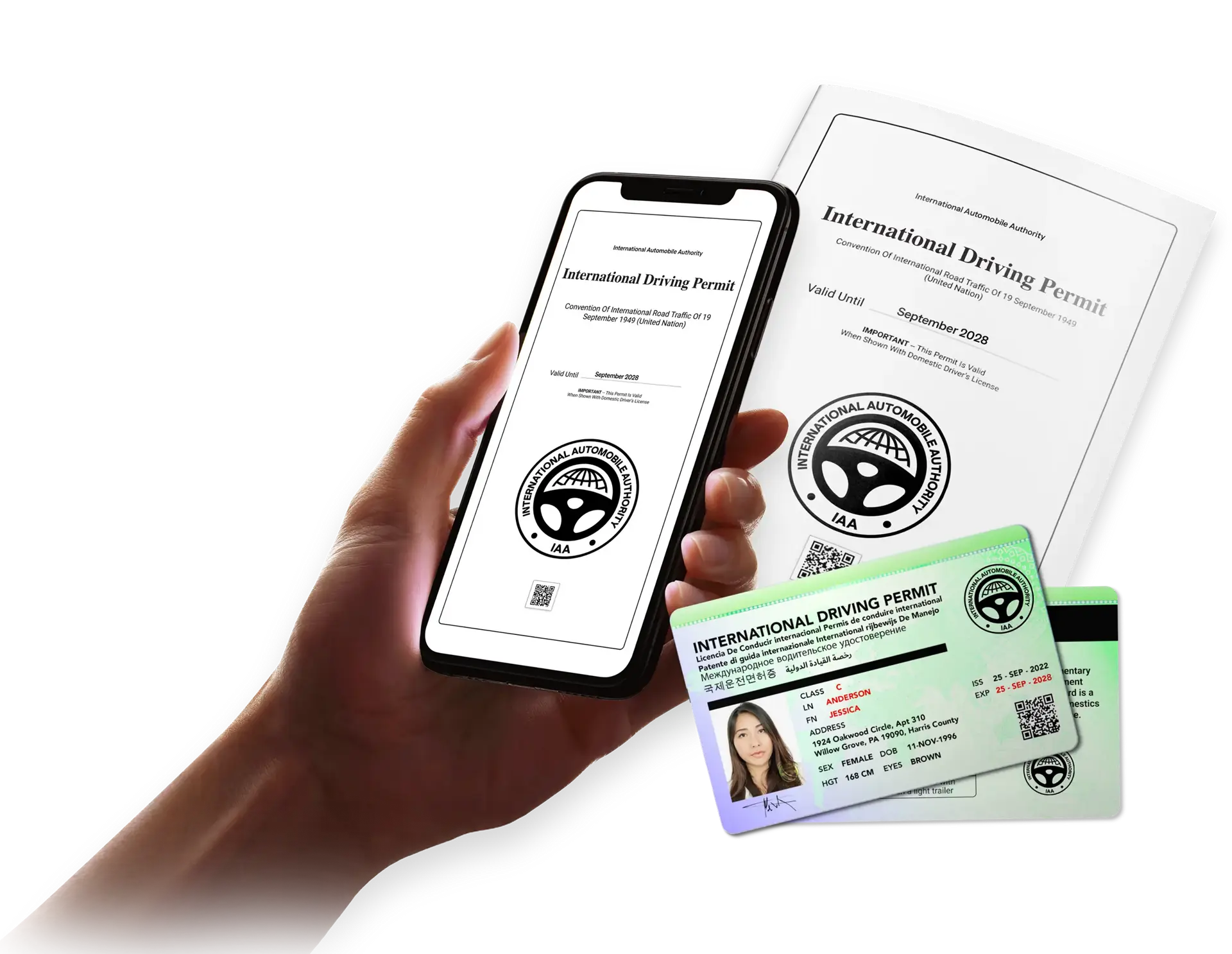
An international driving permit is not a replacement for your driver’s license. Instead, it functions as an official translation booklet that converts your existing license information into multiple languages, typically including English, French, Spanish, Russian, Chinese, and Arabic.
IDPs are based on international road traffic conventions administered by the United Nations. The 1949 Geneva convention typically provides one year validity, while the 1968 Vienna convention can extend validity up to three years, depending on your home country’s rules. The permit contains your photo and driver information, license categories, and personal details in a standardized passport-style format.
You must always carry both documents together when driving abroad—your original driver’s license and your IDP. The international permit alone has no legal force. IDPs can only be issued in the country where your license was issued, through official organizations authorized by national governments. In the United States, the two official organizations that issue IDPs are the American Automobile Association (AAA) and the American Automobile Touring Alliance.
Key Legal Benefits of Holding an IDP
Many countries explicitly require an IDP from foreign drivers whose licenses are written in non-local languages. Japan requires a 1949 Geneva IDP, while Spain and Hungary require one for US driver’s license holders. Brazil and Argentina commonly request IDPs from visitors planning to drive.
When local authorities stop you for a routine check, an IDP helps prove you are driving legally. This becomes critical when your home license uses a different script—Cyrillic, Arabic, or Chinese characters are difficult for European or American officers to verify. Some countries impose on-the-spot fines or may forbid you from continuing to drive if you cannot present the required permit.
Insurance coverage and liability can depend on whether you were driving legally at the time of an incident. Some insurers or credit-card insurance providers may deny claims if local law required an IDP and you did not have one. The multilingual format also helps authorities quickly verify your driving categories—whether you’re licensed for passenger cars only, motorcycles, or heavy vehicles—streamlining any interactions during traffic violations or accidents.
Practical Travel Benefits: Rentals, Road Trips, and Emergencies
Many international car rental companies routinely ask for an IDP alongside a valid license and may refuse to rent without one. This is standard practice with major rental agencies across Italy, Spain, Japan, Thailand, and Australia. Even in certain countries where governments don’t strictly mandate an IDP for short visits, the rental company may list it as a condition in their terms.
Consider a family planning a summer 2026 road trip across Italy and Switzerland. Italian rental counters will expect both documents. A business traveler driving between meetings in Germany and Austria benefits from having documentation that works seamlessly across borders. A student needing occasional car rentals around their university town abroad faces smoother transactions with an IDP in hand.
Emergency situations add another dimension. If you need to drive a friend to hospital, evacuate during a natural disaster, or take over driving when the main driver becomes ill, having an IDP enables you to operate the vehicle legally without delay. The document streamlines interactions with roadside assistance, traffic police, and border guards by instantly showing your driving authorization in a recognized multilingual format.

Language and Identification Advantages
An IDP translates your name, address, license classes, and any restrictions into up to ten major languages, effectively bridging language barriers when traveling across continents. This proves invaluable when police or rental staff in France, Germany, or Japan need to verify your credentials but don’t speak your language.
Beyond driving, an IDP functions as an additional form of photo ID recognized in most countries that accept the document. This is useful when you’d rather not carry your passport for minor procedures—checking into a local car-sharing scheme, leaving identification with a small rental office, or registering with transportation apps.
The standardized layout and official stamps make the document more readily trusted than informal translations or unofficial products marketed online as an “international driver’s license.” Only a translation issued through proper channels carries legal recognition.
Benefits for Different Types of Travelers
The advantages of an international driving permit vary depending on your travel profile. Whether you’re visiting for two weeks or relocating for several years, an IDP addresses different needs across traveler categories.
Tourists and Vacation Travelers
A two-week summer road trip across Italy and Switzerland or a skiing holiday in Japan during winter 2026 becomes significantly smoother with an IDP. Popular tourist destinations frequently enforce IDP requirements, and having one reduces the chance of being turned away at rental counters or facing fines. The permit enables spontaneous detours to rural areas, national parks, or coastal towns poorly served by public transport.
International Students
Students enrolled abroad for a semester or full academic year often need occasional car access for groceries, weekend trips, or part-time work. An IDP obtained before departure makes it easier to rent vehicles near campus or participate in car-sharing programs. Some internships, fieldwork placements, or research projects require driving between locations—apply at your local AAA office several weeks before your departure date.
Expats and Long-Term Visitors
Newcomers often rely on an IDP during the first months of relocation while sorting out residence permits and local license exchanges. Many countries let new residents drive on an IDP and foreign license for a limited period—typically three to twelve months—before requiring a local driver’s license. This bridge period allows immediate driving for house hunting, school visits, or commuting to a new job.
Business Travelers and Professionals
Frequent business travelers visiting multiple countries for meetings, trade fairs, or project work benefit from maintaining a valid IDP. Corporate travel managers can standardize rental policies across destinations, and individual travelers spend less time dealing with documentation issues at foreign rental counters. In sectors like construction, field engineering, or medical outreach, driving is essential—employers may request an IDP as part of risk management protocols.
Cost, Validity, and Convenience Compared to the Risks
IDP validity periods typically range from one year under the 1949 convention to up to three years under the 1968 convention, depending on your home country’s rules. Costs are modest—generally $20 to $50 USD plus any mail fees. You can apply online through authorized organizations or visit an AAA office in person.
Compare these small, predictable costs with potential losses: a rental refusal forcing expensive alternative transport, on-the-spot fines exceeding several hundred euros, or invalidated insurance after an accident. A single incident without proper documentation can cost thousands.
Applying three to four weeks before a planned trip allows buffer time for processing and postal delivery. Once you have an IDP in hand, you can use it repeatedly on multiple trips until it expires—particularly economical for frequent travelers who visit other countries several times per year.
Common Misconceptions and How to Avoid IDP Pitfalls
Several misunderstandings persist about international driving permits. First, an IDP does not replace your national license—you must carry both documents together. The IDP is only a translation of your existing credentials.
Second, many websites market “international licenses” that are not recognized by authorities. Only organizations officially designated by national governments—like AAA in the United States—can issue valid IDPs. A reputable company will never promise instant delivery of a legally recognized permit.
Third, holding an IDP does not authorize you to drive vehicle types you aren’t licensed for at home. If your US driver’s license doesn’t cover motorcycles, your international permit won’t either. Existing restrictions or suspensions travel with you.
Finally, regulations change. Requirements that applied in 2024 may differ by 2026. Always verify current rules on official government or embassy websites before each trip, and recognize that recognition lists can shift between planning and departure.
How to Decide If You Personally Need an IDP
Consider your destinations for the next twelve to thirty-six months, your planned length of stay, whether you’ll rent or borrow vehicles, and whether your local driver’s license is in a widely understood language.
A US traveler planning trips to Italy and Japan in 2026 almost certainly needs an IDP—both countries require or strongly enforce the requirement. A UK visitor driving only in Ireland for a weekend probably doesn’t need one. A Brazilian student spending a year in Germany will very likely find it helpful or required for rentals and local compliance.
When doubt exists—because rental company websites give conflicting information or travel forums present mixed advice—it’s safer and cheaper to obtain an IDP in advance. The cost is low, validity extends across multiple trips, and peace of mind eliminates stress at critical moments.
Plan around your license expiry dates so the IDP remains valid throughout your travels. An international permit cannot extend an expired national license. For 2026 travelers, obtaining an IDP represents prudent risk management: a low-cost safeguard that significantly reduces legal and logistical complications when you drive overseas.