


Introduction
Spring road trip destinations offer travelers the perfect combination of mild temperatures, blooming landscapes, and manageable crowds before the summer rush hits popular routes. Whether you’re planning a spring break road trip with family or seeking a scenic journey through wildflower-covered hillsides, the months between March and May present ideal conditions for hitting the open road across America.
This guide covers warm weather escapes along coastal routes, mountain drives through national parks, and desert adventures where cactus blooms paint the landscape in unexpected colors. The target audience includes families navigating school breaks, couples looking to avoid summer crowds, and adventure seekers ready to explore dramatic cliffs, lush forests, and historic routes. What falls outside this scope: international destinations, winter road trips, and air travel itineraries.
Direct answer: The best spring road trip destinations include warm-weather coastal routes like the Florida Keys and Pacific Coast Highway, scenic mountain drives like Blue Ridge Parkway with its dogwood blooms, and desert bloom regions across Arizona and Southern California where wildflowers carpet the landscape in late March through May.
From this guide, you will gain:
- Knowledge of top spring destinations organized by region and travel style
- Optimal timing strategies for different geographic areas
- Practical route planning insights for spring weather variability
- Solutions to common challenges like spring break crowds and post-winter road conditions
- Actionable next steps to plan your spring road trip
Understanding Spring Road Trip Destinations
An ideal spring road trip destination delivers mild spring weather without the extremes of winter cold or summer heat, seasonal attractions unavailable at other times of year, lower visitor density compared to peak summer months, and roads and facilities that have reopened after winter closures. These factors combine to create travel conditions that road trippers consistently rank as favorable.
Warm Weather Escape Destinations
Warm weather escape destinations are southern and desert regions offering consistent temperatures in the comfortable range from March through May. These areas attract travelers seeking early-season warmth before northern regions fully thaw.
The Florida Keys deliver turquoise waters and ocean views with temperatures averaging in the mid-70s to low 80s°F during spring. Arizona’s deserts—including areas near Phoenix and Tucson—feature perfect hiking weather and the beginning of dramatic cactus blooms. Texas Hill Country explodes with bluebonnets in mid-to-late April, with mapped driving trails connecting the best viewing spots near towns like Ennis. Southern California’s coast from San Diego to San Francisco provides mild temperatures ideal for exploring beaches, small towns, and iconic attractions like the Golden Gate Bridge.
These destinations connect directly to the practical goal of avoiding late winter cold while maximizing outdoor adventure opportunities during comfortable conditions.
Scenic Bloom Destinations
Scenic bloom destinations are routes featuring spring wildflowers, cherry blossoms, and seasonal foliage that appear only during specific windows each year. Timing matters significantly—blooms can last as briefly as seven to ten days for cherry blossoms or span several weeks for broader wildflower displays.
Washington D.C.’s cherry blossoms draw visitors in late March to early April, though the exact peak shifts annually based on winter temperatures. California’s desert regions can produce superbloom conditions after wet winters, with Joshua Tree National Park reliably displaying desert flowers from March through May. The Great Smoky Mountains host hundreds of wildflower species with peak displays in late April through May depending on elevation.
Understanding bloom timing creates unique spring-only experiences unavailable during summer road trips, making advance planning essential for photographers and nature enthusiasts.

Regional Spring Destination Categories
Building on these foundational concepts, specific geographic regions offer distinct advantages for spring travel. Each area features unique seasonal attractions, climate patterns, and route characteristics that appeal to different travel styles.
Coastal Spring Routes
Pacific Coast Highway ranks among America’s most celebrated scenic drives, and spring brings particular advantages. Daytime temperatures along Highway 1 average in the 60-70°F range, ideal for stopping at overlooks and hiking trails without the fog banks common in summer. After wet winters, hillsides along the California coast display carpets of California poppies, lupines, and bush poppies from April through May. The route connects iconic stops including San Francisco, Big Sur’s dramatic cliffs, and the Oregon coast further north.
East Coast coastal routes offer different spring experiences. Maine’s lighthouse route opens fully by mid-spring, with rocky coastlines and small towns accessible before summer crowds arrive. The Outer Banks in North Carolina provides beach access and mild weather, while South Carolina’s coastal routes deliver warm temperatures earlier in the season.
Gulf Coast destinations including Florida’s panhandle and Texas Gulf beaches warm early—often by late March—providing road trippers with beach access, seafood towns, and delta landscapes. Humidity and occasional storms require flexibility, but overall conditions favor spring travel.
Mountain and Canyon Destinations
Blue Ridge Parkway produces spectacular spring coloration through wildflowers and blooming trees across its 469-mile route through Virginia and North Carolina. The bloom period begins in valleys around late March, moving upslope through April and May. Dogwood and redbud peak in early April at lower elevations, while rhododendron and mountain laurel bloom later toward May-June in higher terrain. Hiking trails access overlooks and waterfalls enhanced by spring melt.
Grand Canyon offers spring conditions ideal for exploration before summer heat makes hiking dangerous. The South Rim remains open year-round with comfortable temperatures, while the North Rim typically opens in mid-May depending on snowpack. Note that Hermit Road restricts private vehicles seasonally (typically by early March), requiring shuttle use.
Rocky Mountain routes open progressively through spring as snow melts. Wildlife viewing peaks as animals emerge from winter patterns, and waterfall flows reach maximum volume from snowmelt. Trail access varies by elevation—always check current conditions before planning high-altitude hikes.
Desert and Southwestern Routes
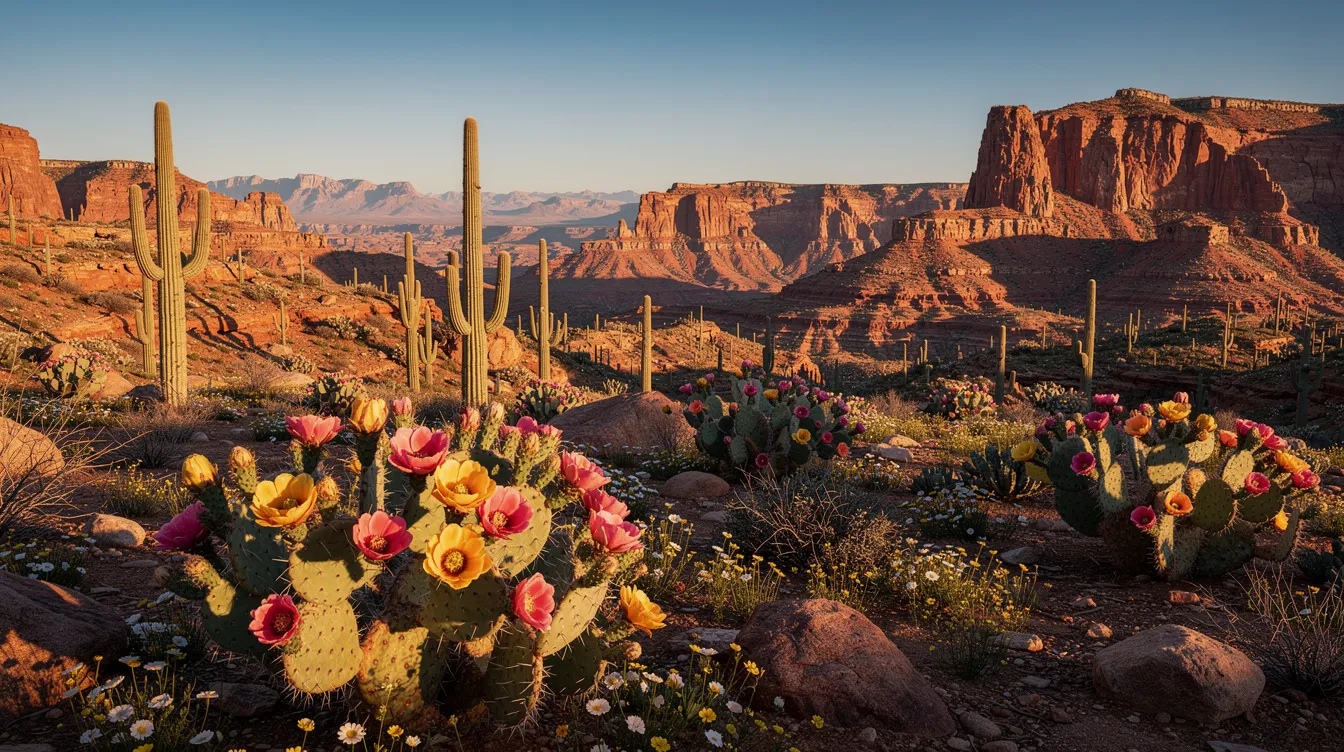
Arizona’s Sonoran Desert delivers exceptional spring road trip conditions. Organ Pipe Cactus National Monument blooms between March and May with golden brittlebrush, Mexican gold poppies, and purple verbena. Picacho Peak near Phoenix produces some of the earliest blooms—sometimes in February. Joshua Tree National Park reliably displays desert blooms from March through May, including evening primrose and various cactus flowers.
Utah’s Mighty Five national parks—Arches National Park, Canyonlands National Park, Bryce Canyon, Zion, and Capitol Reef—offer ideal spring conditions. Daytime highs warm sufficiently for comfortable hiking, trails open fully, and crowds remain manageable before summer. Late snow or icy patches at higher elevations require caution, but desert wildflowers in lower areas peak in April and early May.
New Mexico cultural routes connect Santa Fe, Taos, and Albuquerque with spring arts festivals, warming climate, and desert flora in bloom. Albuquerque in particular has seen surging popularity—booking data shows increases exceeding 200% as travelers seek alternatives to traditional spring break destinations.
Planning Your Spring Road Trip Destination
Choosing the right destination requires matching your travel dates with regional spring timing, considering your group’s preferences, and building flexibility for weather variability. Spring conditions vary significantly by latitude and elevation—a route perfect in late March may be impassable in early March or uncomfortably warm by late May.
Optimal Timing for Different Regions
Understanding when spring arrives across different regions prevents disappointment and maximizes your experience:
- Early spring (March): Best for deep south destinations, desert Southwest, Gulf Coast, and Florida. California deserts and the Florida Keys offer warm weather while mountain passes remain under snow. Spring break crowds concentrate during mid-March at popular beach destinations.
- Mid-spring (April): Optimal for transitional zones including Blue Ridge Parkway foothills, central deserts, and the broader Southwest. Wildflowers reach peak bloom in many regions, and moderate weather creates ideal hiking conditions. Texas Hill Country bluebonnets typically peak mid-to-late April.
- Late spring (May): Northern mountain passes open, high deserts become accessible, and northern states including the Pacific Northwest and New England begin blooming. More daylight extends driving and exploration time, though lodging prices rise and crowds increase at national parks.
Peak season considerations: Spring break weeks vary by school district, creating unpredictable crowd patterns. Warm-weather destinations like Florida and Arizona see significant booking demand during March school breaks. Planning travel for early March or mid-week can reduce congestion and costs.
Destination Comparison by Travel Style
Travel Style | Best Destinations | Key Features |
|---|---|---|
Family-Friendly | Florida Keys, San Diego, Texas Hill Country | Easy drives, activities for kids, warm weather, accessible nature trails |
Adventure Seekers | Utah National Parks, Grand Canyon, Canyonlands | Challenging hiking trails, dramatic landscapes, outdoor adventure |
Scenic Drives | Blue Ridge Parkway, Pacific Coast Highway, Oregon Coast | Photography opportunities, rolling vineyards, ocean views |
Cultural Exploration | Santa Fe, New Mexico routes, historic Route 66 | Small towns, urban fun, guided tour options, local festivals |
Travelers should consider drive distances between stops—desert routes often feature long stretches without services, while coastal routes offer frequent small towns for breaks. Families with young children typically prefer shorter daily driving distances and frequent stops at state park visitor centers and nature trails.
Common Challenges and Solutions
Spring travel presents specific considerations that differ from summer road trips. Weather variability, crowd patterns during school breaks, and post-winter road conditions require advance planning and flexibility.
Unpredictable Spring Weather
Spring weather shifts rapidly—temperatures can drop 4-7°F per 1,000 feet of elevation gain, and afternoon storms develop quickly in mountain regions. Pack layers regardless of destination, and check forecasts for your entire route rather than just your destination. Build flexibility into your itinerary allowing for weather delays or route changes without missing key experiences.
Spring Break Crowds at Popular Destinations
Spring break concentrates visitors at known destinations including Florida beaches, Arizona national parks, and coastal California routes. Solutions include choosing lesser-known scenic byways—the Natchez Trace Parkway or Ozark National Scenic Riverways see far fewer visitors than Blue Ridge Parkway during peak weeks. Traveling mid-week significantly reduces congestion at popular overlooks and hiking trail parking areas.
Road Conditions After Winter
Mountain roads may remain closed or feature hazardous conditions through early spring. The Grand Canyon’s North Rim roads typically open mid-May depending on snowpack and safety assessments. Blue Ridge Parkway sections occasionally close for ice or fog. Always verify conditions through National Park Service websites or state department of transportation updates before departing. Remote desert roads may lack water or services in early season—pack emergency supplies and inspect your vehicle thoroughly before heading into isolated areas.
Conclusion and Next Steps
Spring delivers the best combination of comfortable weather, dramatic seasonal displays, and manageable crowds for road trips across America. From the turquoise waters of Key West to the desert blooms of Arizona and the dogwood-lined Blue Ridge Parkway, spring road trip destinations offer experiences unavailable during other seasons.
Immediate actionable steps:
- Choose your region based on your specific travel dates—desert and southern routes for March, mountain and transitional zones for April, northern routes for May
- Book accommodations early for spring break periods, particularly at popular national parks where campgrounds and lodges fill months ahead
- Check road conditions for mountain routes through official National Park Service and state transportation websites
- Visit for wildflower bloom forecasts and current conditions at specific destinations
Related topics worth exploring: detailed route planning guides for specific highways like Pacific Coast Highway or Blue Ridge Parkway, seasonal driving safety considerations for variable spring weather, and budget planning strategies including off-peak timing and alternative lodging options.
Additional Resources
- National Park Service websites (nps.gov) for current road closures, trail conditions, and wildflower bloom forecasts at parks including Grand Canyon, Joshua Tree, and Great Smoky Mountains
- State tourism websites featuring spring event calendars, scenic byway maps, and festival dates for destinations like Texas Hill Country and New Mexico
- Weather tracking tools including NOAA regional forecasts for route planning and real-time condition updates
- Travel industry reports from sources like AAA for crowd predictions and peak travel dates during spring break periods