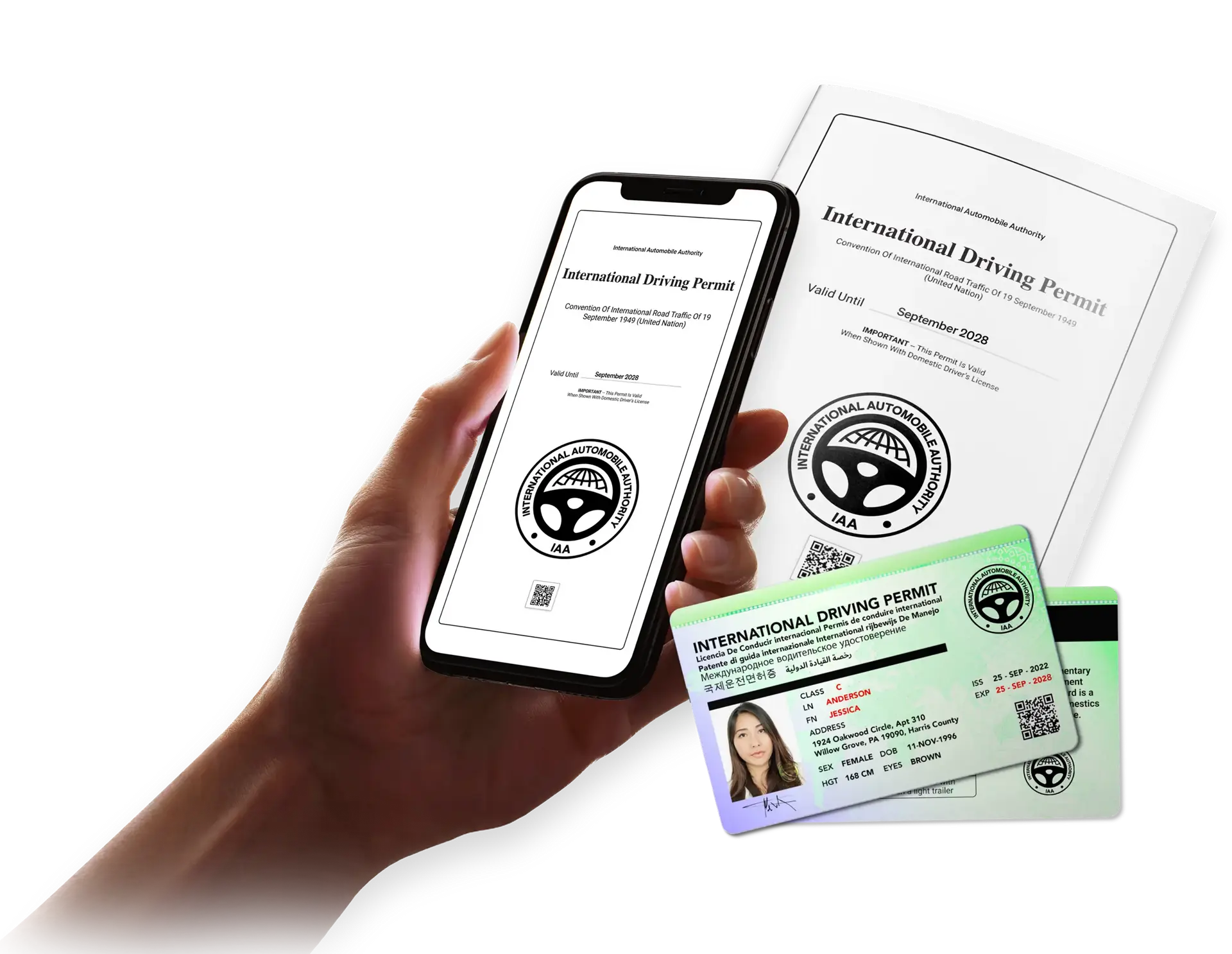


Yes, in some countries you can drive with just your domestic licence, while in others you legally need an international driving permit. It depends entirely on where you go in 2026. You must have a valid driver's license from your home country to obtain an IDP and to drive legally abroad.
An international driving permit (IDP) is a translation of your driver’s license, not a stand-alone licence. Many countries require or strongly recommend one, especially non-English-speaking destinations.
Here’s what the landscape looks like in 2026:
- No IDP typically needed for U.S. licence holders in Canada (unlimited duration), the U.K. (up to 12 months), Ireland, and Mexico (up to 6 months in most states)
- IDP required in Japan, Thailand, and the United Arab Emirates for most tourists—Japan enforces fines up to ¥300,000 (about $2,000 USD)
- EU/EEA licence holders can drive across EU countries like France, Spain, Germany, and Italy without an IDP under mutual recognition rules
- Post-Brexit: UK licence holders can still drive in most European countries for up to 90 days without an IDP, though some non-EU states require it
Insurance coverage may be denied if you drive without a valid license or permit.
Important: “No one asked for my IDP at the rental counter” doesn’t mean it isn’t legally required. Fines and invalid insurance are real risks that surface after an accident or traffic stop. Only authorized organizations like AAA and NAC can sell official IDPs. Beware of scams from illegal sellers who sell counterfeit or useless documents.
Before you decide to drive abroad without an IDP, check your specific destination and your rental company’s policy for your travel dates.
The typical fee for obtaining an IDP in the US is around $20. You can apply for an IDP from the American Automobile Association (AAA) or the National Automobile Club (NAC). To apply, you need a valid driver's license, two passport-style photos, and a short application form. You must be at least 18 years old and have a full driver's license, not a learner's permit.
What Is an International Driving Permit and Why Does It Matter?
An international driving license is an officially recognised translation booklet of your valid driver's license, based on the 1949 Geneva or 1968 Vienna road conventions. You must have a valid driver's license from your home country to obtain and use an IDP. An International Driving Permit (IDP) is a special document that allows licensed motorists to drive in other countries without further tests or applications. It translates your details into multiple languages including English, French, Spanish, Russian, Chinese, and Arabic.
Key facts about an IDP:
- Does not replace your home licence—you must carry both
- Typically valid for one year from issue date
- Only authorized bodies can issue legitimate IDPs (AAA or American Automobile Association in the U.S., CAA in Canada, AA/RAC in the U.K., ADAC in Germany)
- An IDP translates your driver's license identification information into 10 languages
An IDP helps with roadside checks when officers don’t read your language, smooths the rental process with local rental firms, and reduces misunderstandings after accidents. As of 2026, digital wallet apps aren’t widely accepted overseas—most local authorities still expect physical documentation.
Where Can You Drive Without an IDP? (Country Examples)
This is guidance, not legal code. Rules change with regulatory updates, Brexit adjustments, and bilateral agreements.
Europe:
- EU/EEA licence holders generally don’t need an international driving permit to drive in other EU countries as tourists
- U.S., Canadian, Australian, and UK licence holders can often drive in western Europe for short stays (up to 90 days) with a valid driver’s license, though rental car companies in Italy or Portugal may insist on an IDP
- Many countries accept a valid U.S. license for short-term stays, but others strictly require an IDP by law.
North America:
- U.S. licence accepted in Canada and Mexico for visitors; some Mexican states or insurers may still request an IDP
- Canadian licence generally accepted in the U.S. for tourists
- Many countries accept a valid driver's license for short-term visits, but some may require an IDP by law.
Oceania:
- Many travelers can drive in Australia and New Zealand with an English-language licence for up to 12 months
- Non-English licences require an IDP or certified translation
Note: Acceptance “without IDP” assumes your local license is in Latin script and English. Otherwise, an IDP or translation is almost always required. Verify requirements for your exact nationality and trip abroad dates.
An IDP is recognized in many countries that are not signatories to the 1949 Convention on Road Traffic.
Countries Where Driving Without an IDP Is a Bad Idea (or Illegal)
In some destinations, driving abroad without the required permit means fines, vehicle impoundment, invalid insurance, or rental denial.
Japan:
- Requires an IDP based on the 1949 Geneva Convention for most foreign tourists
- Penalties include fines up to ¥300,000 or deportation in serious cases
United Arab Emirates (Dubai, Abu Dhabi):
- Rental car companies reject approximately 70% of non-GCC tourists without an IDP, especially for non-English licences
Thailand and Indonesia:
- Police in tourist areas like Phuket increasingly request IDPs during stops
- Spot fines of 500-1,000 THB ($15-30 USD) are common
Other countries requiring IDPs:
- Saudi Arabia, Oman, Serbia, and Morocco often legally require them or rental companies demand them
Requirements vary by visitor nationality—EU licence holders might be treated differently than U.S. drivers in the same foreign country. If there’s any uncertainty, assume you need an international driving permit instead of gambling on local discretion.
Rental Car Considerations Abroad
When planning to rent a car in a foreign country, preparation is key to a hassle-free experience. Before you book, check if the country you’re visiting requires an international driving permit (IDP) in addition to your valid local license. Many countries and rental car companies insist on seeing both documents before handing over the keys, so it’s wise to confirm requirements directly with your rental company ahead of time.
Understanding local traffic laws is just as important as having the right paperwork. Each country has its own set of regulations—what’s standard at home may be very different abroad. For example, in Italy, drivers must be aware of “zona a traffico limitato” (ZTL) zones, where unauthorized entry can result in hefty fines. Other countries may have unique rules about speed limits, alcohol limits, or required safety equipment in your vehicle.
To avoid penalties and ensure safe driving, always research the specific laws of your destination. Many countries require an IDP for car rentals, and some rental car companies will not rent to you without one, even if local law is ambiguous. Obtaining an international driving permit IDP before your trip is a simple step that can save you from unexpected trouble at the rental counter or on the road. Remember, being prepared with the correct documentation and knowledge of local regulations is the best way to enjoy your driving adventure abroad.
What Happens If You Drive Abroad Without an IDP When It’s Required?
Here are the practical consequences when you ignore local traffic laws requiring an IDP:
- Fines and citations during roadside checks (common in tourist hotspots)
- Rental denial on arrival—major rental companies strictly follow corporate policy
- Insurance problems: accidents may not be covered if the policy required an IDP
- Administrative hassles: car impoundment, court appearances, on-the-spot deposits
A 2025 U.S. traveler in Italy reported Europcar refusal at Rome Fiumicino despite legal allowance, forcing a $200 alternative transport solution. Even if police “let you off” at the roadside, insurers can later claim you were driving improperly.
The small cost of obtaining an IDP (often under $30 via AAA with a passport photo, processed within a week) is minor compared to penalties or a denied insurance claim.
Driving Without an IDP vs. Alternative Options
Some frequent travelers run out of time to get an IDP or realize they need one while already overseas. Here are safer alternatives:
- Public transportation: In many countries like France, Germany, and Japan, trains and buses are safe, frequent, and often faster than a rental car
- Licensed taxis or ride-hailing (Uber, Bolt, Grab) where legal
- Private transfers from airports and between tourist centres
- Organised tours for remote areas where public transport is limited
- Chauffeur services: Hire a vehicle with a local driver to avoid licensing issues
If you discover an IDP is mandatory while abroad, contact your home automobile association about remote application options. Adjusting your travel plans to rely on trains rather than self-drive is almost always better than risking fines or a serious accident without proper documentation.

Navigating Public Transportation
For many travelers, public transportation is a smart and efficient way to explore a foreign country. European countries, in particular, are known for their reliable and extensive networks of trains, buses, and metro systems, making it easy to get around without the need for a rental car. Before your trip, take time to research the available public transportation options in your destination—many cities offer detailed guides and maps online.
Understanding the local rules and laws that apply to public transportation and pedestrian areas can help you avoid confusion and stay safe. For example, some countries have strict regulations about ticket validation or crossing streets only at designated crosswalks. Consulting local authorities or tourism offices can provide valuable insights into the best ways to navigate the city and any special passes or discounts available for travelers.
In addition to traditional options, many cities now offer tourist-friendly services like hop-on hop-off buses and bike-sharing programs, which can be a fun and flexible way to see the sights. By familiarizing yourself with the local transportation system and rules, you can make the most of your trip and avoid the stress of driving in unfamiliar territory.
Crossing Borders with an International Driving Permit IDP
If your travel plans involve driving across borders, carrying an international driving permit (IDP) alongside your valid local license is essential. Many countries require both documents for foreign drivers, and local authorities may ask to see them at border crossings or during roadside checks. An IDP is not a replacement for your home country license, but it serves as an official translation that can help prevent misunderstandings.
Before setting out, review the specific rules and regulations for each country you’ll be visiting. Some countries may require additional documentation, such as a passport photo attached to your IDP or proof of extra insurance coverage. Frequent travelers should pay special attention to these details, as requirements can vary widely and change with little notice.
Carrying both your IDP and local license at all times is the best way to avoid trouble, penalties, or delays when crossing borders. Being prepared ensures you can continue your journey smoothly and legally, no matter how many countries you plan to visit.
Travel Planning and Preparation
Proper travel planning and preparation are the foundation of a successful driving experience abroad. Start by researching the international driving permit (IDP) requirements for every country on your itinerary. Many countries require an IDP, and rental car companies often have their own policies, so it’s important to confirm with both the authorities and your chosen rental company before you travel.
Make sure your driver’s license is valid and up to date, and gather all necessary documentation, including your IDP and any required insurance papers. Understanding local traffic laws and regulations is crucial—what’s legal in your home country may not be allowed elsewhere. For example, some countries have unique rules about speed limits, alcohol consumption, or mandatory safety equipment in your car.
Organizations like the American Automobile Association (AAA) can provide guidance on obtaining an IDP and offer resources to help you prepare for driving in different parts of the world, from Spain and other European countries to destinations like Mexico and Canada. Consider purchasing rental car insurance to protect yourself against unexpected events, and always keep your documentation handy while driving.
By planning ahead and staying informed, you’ll be well-equipped to handle the challenges of driving abroad, ensuring a safe and enjoyable trip wherever your travels take you.
How to Check If You Personally Can Drive Abroad Without an IDP
Follow this checklist before planning car rentals:
- Heading: Before you drive abroad, plan your route and understand local regulations, including traffic zones, border crossings, and insurance requirements.
- Tips: Prepare for international driving by checking your documentation, confirming your insurance coverage, and researching local driving laws and customs. Always stay alert and follow safety guidelines when renting or driving a car overseas.
- Confirm your licence type: Full, valid driver’s license (not provisional), photo card, Latin script/English preferred
- Check official government travel advice: U.S. Department of State, UK FCDO, or Government of Canada advisories have “driving” sections
- Consult the destination’s embassy: Ask whether tourists with your nationality need an IDP in 2026
- Ask your rental company in writing: Email the specific branch (e.g., “Hertz Rome Fiumicino”) and keep their response
- Review insurance terms: Check whether travel or rental insurance requires an IDP to protect your cover
- Research local traffic laws: Always research the local traffic laws before you get behind the wheel.
Complete this checklist several weeks before departure so you have time to apply if needed. If any official source or rental company suggests an IDP “may be” required, obtain one rather than relying on forum anecdotes.
It's important to stay vigilant as a driver, passenger, or pedestrian near a road. Vehicle accidents are the top cause of non-natural deaths of U.S. citizens abroad, and many countries are notorious for high traffic fatality rates and poorly maintained roads. Safe driving overseas starts with proper documentation and preparation before you get behind the wheel.