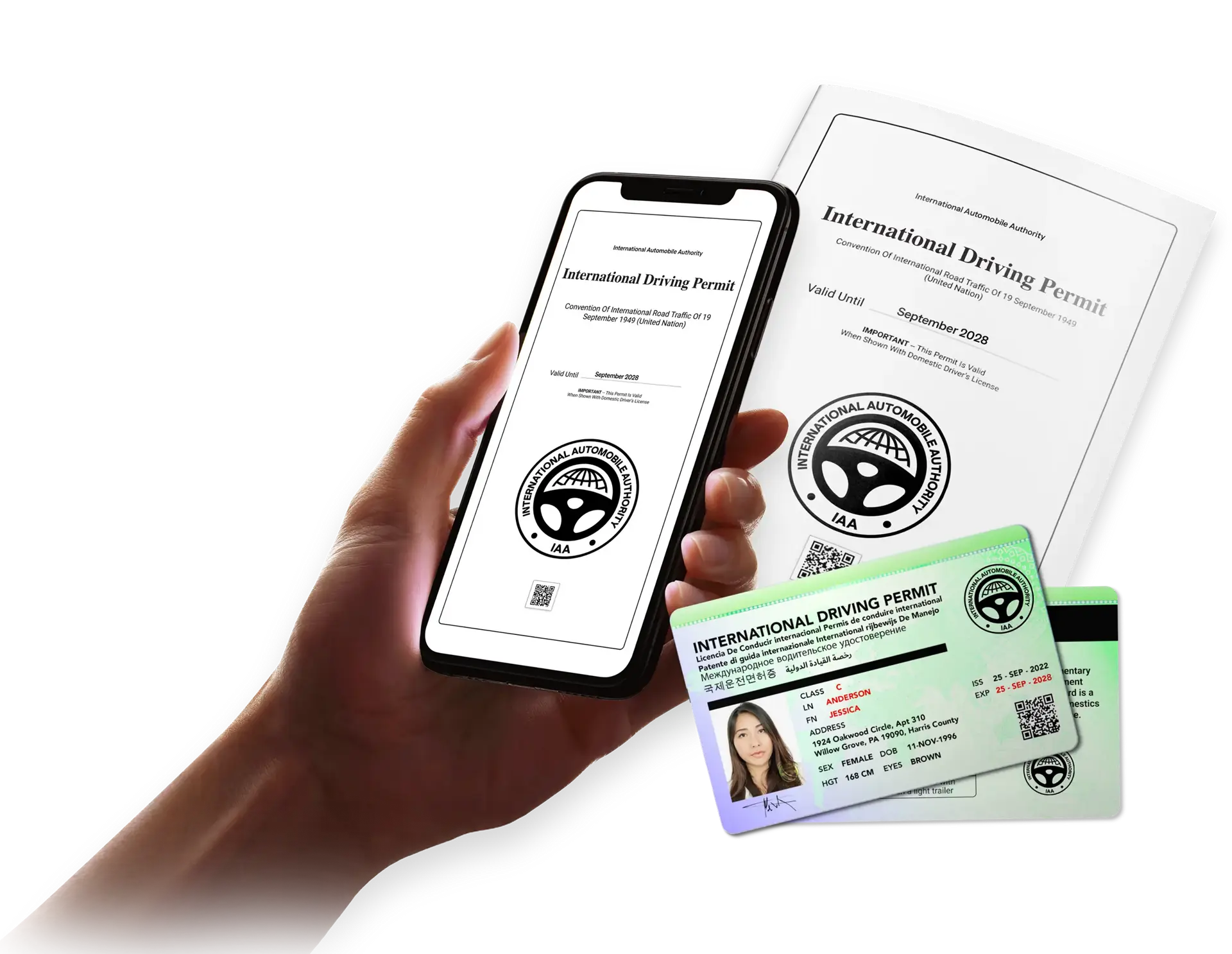


Spain offers everything from Atlantic cliff roads to sun-drenched Mediterranean coasts, and a rental car unlocks it all. But before you hit the autopista, you need to understand Spanish traffic laws, document requirements, and the quirks that catch first-time visitors off guard. This guide covers everything from speed limits and roundabouts to parking fees and low emission zones—plus how to secure an International Driving Permit before you land.
Quick overview: can you drive in Spain and do you need an IDP?
Spain drives on the right, enforces strict traffic laws, and welcomes foreign visitors behind the wheel—provided you carry the right documents. For many travellers, that includes an International Driving Permit (IDP) from International Automobile Authority.
- Most non-EU/EEA visitors (USA, UK post-Brexit residents abroad, Canada, UAE, India, Australia) can legally drive on their home licence for up to six months within any 12-month period.
- However, car rental companies across Madrid, Barcelona, Malaga, and Mallorca frequently require an IDP as an official translation—reports from expat forums suggest up to 70% of rental desks reject bookings without one.
- EU/EEA and Swiss licence holders generally do not need an IDP to drive or rent in Spain, though checking individual rental terms is always wise.
- An IDP is especially recommended if your driving licence uses a non-Latin alphabet (Arabic, Cyrillic, Chinese, Japanese, Korean) or isn’t in Spanish, English, French, German, or Italian.
- Our IDPs from International Automobile Authority can be applied for online in about 5 minutes, with a digital copy delivered in 5–8 minutes—perfect for last-minute travellers.
Essential documents and legal requirements
Local police and Guardia Civil can issue on the spot fines if you lack required documents or safety equipment. Prepare before you arrive to avoid roadside hassles.
Documents tourists must carry at all times:
- Valid passport or national ID
- Original driving licence (not a photocopy)
- International Driving Permit if required by your rental company or if your licence uses non-Latin script
- Rental agreement or vehicle registration document (V5C/VE103 for your own car)
- Proof of insurance—the physical green card is no longer mandatory for EU-insured vehicles after 2021, but a digital policy summary is recommended
Licence validity and exchange rules:
- Visitors can use a foreign licence for up to six months in any 12-month period
- Stays beyond six months typically require exchanging for a Spanish driving licence through the DGT (Dirección General de Tráfico)
- UK, US, Canadian, and Australian drivers often need an IDP to rent, even when Spanish driving law technically permits the home licence alone
Age requirements:
- Minimum driving age: 18 for cars and vehicles under 3.5 tonnes
- Minimum age for motorcycles up to 125cc: 16 (following 2022 reforms)
- Most rental companies require drivers aged 21+ with at least one year’s experience
- Under-25 drivers typically pay a young driver surcharge of €10–€30 per day
ETIAS from 2026:
- From mid-2026, visa-exempt non-EU visitors will need ETIAS authorisation (€7 fee, valid 3 years) for border entry
- ETIAS is separate from driving permissions and does not replace licence or IDP requirements
Driving basics: side of the road, signs, and everyday rules
Some rules will feel familiar if you’ve driven elsewhere in the European Union, but visitors from the UK, US, and other countries where motorists drive on the left often need an adjustment period.
- Spain drives on the right and overtakes on the left—take extra care at junctions and roundabouts during your first 24–48 hours while your spatial awareness recalibrates.
- Road signs use the metric system exclusively: speeds in km/h, distances in metres and kilometres. Standard European symbology applies, but rural signage can be late, small, or missing entirely at some junctions.
- A 2023 DGT audit found 22% of secondary road junctions lacked adequate advance warnings—use a navigation app with offline maps to compensate.
- White circular signs with a red border indicate mandatory limits. Blue rectangular signs often show advisory speeds or upcoming changes.
Mandatory safety equipment:
- Two warning triangles (or a V-16 LED beacon, phased in since 2022)
- High-visibility vest for each occupant, accessible without exiting the vehicle
- Spare wheel, repair kit, or inflation compressor
Lighting rules:
- Headlights (dipped) must be used in tunnels longer than 250m and during reduced visibility (fog, rain, sunrise/sunset outside urban areas)
- Failure to comply can result in on the spot fines of €200–€500
Speed limits, cameras, and fines
Speed limits change frequently as you transition between motorways, rural roads, and built up areas. Spain enforces these limits rigorously through fixed speed cameras, section control systems, and mobile units.
General speed limits (2026):
Road Type | Limit |
|---|---|
Motorways and autovías (A/AP) | 120 km/h |
Conventional rural roads | 90 km/h |
Multi-lane urban roads | 50 km/h |
Single-lane urban roads | 30 km/h |
Shared pedestrian zones | 20 km/h |
- White circular signs with red borders indicate the national speed limit or local override—always follow posted signage.
- On some single-carriageway 90 km/h roads, you may temporarily exceed the limit by up to 20 km/h to overtake a slower vehicle, but this is never permitted on motorways or dual carriageways. Confirm current DGT rules before your trip.
Camera enforcement:
- Over 3,500 fixed speed cameras are positioned across Spain, often on gantries before village entries
- Around 1,200 average-speed (section control) cameras span 10–20 km stretches on major A-roads like the AP-7
- Mobile cameras operate from unmarked vans and roadside boxes, generating roughly €300 million in fines annually
Fines and payment:
- €100 for 1–20 km/h over the limit (50% discount if paid within approximately 20 days)
- €300–€600 for 21–50 km/h over, plus 4–6 points deducted from licences
- Tourists often must pay immediately by card; failure to pay can result in vehicle immobilisation
Speed camera detectors:
- Radar jammers are illegal—fines up to €6,000 plus 6 points
- Passive GPS apps (Waze, Google Maps) that alert camera locations without interfering are generally legal
Safest strategy: stick to posted limits, especially near schools, villages, and low emission zones where limits can drop sharply to 20–30 km/h.
Roundabouts, junctions, and Spanish driving style
Roundabouts (rotondas) dominate Spanish urban road design, with over 50,000 nationwide. Combined with unusual junction layouts in historic towns, they require defensive driving.
Correct roundabout etiquette:
- Yield to traffic already circulating from your left
- Use the inside lane (left lane) for circulating if taking later exits
- Move to the outer lane (right lane) only when ready to exit
- Always signal when changing lanes or exiting—approximately 100m before your exit
Reality vs theory:
- Many local drivers stay in the outside lane for multiple exits without signalling—DGT-affiliated observations suggest this happens in roughly 40% of cases
- Drive defensively: double-check mirrors, maintain 360° awareness, and never assume another car will exit
Junction challenges:
- Urban junctions in cities like Seville, Granada, and Toledo can sit on bends or at odd angles, obscuring vehicles coming from side streets
- Right turn on red is illegal unless a specific green arrow allows it—different from practice in many US states
- Fines for running traffic lights or improper turns typically start around €200
Practical recommendation:
- Choose an automatic rental car if you’re uncomfortable with manual transmissions or right-side driving; this lets you focus on lane positioning in busy multilane roundabouts in major cities like Madrid or Barcelona
Fuel, toll roads, and service areas
Spain boasts one of Europe’s densest motorway networks—over 17,000 km—with fuel stations and service areas positioned conveniently along major routes.
Fuel types:
- Gasolina 95: standard unleaded (approximately €1.65/litre in 2026)
- Gasolina 98: premium unleaded (approximately €1.75/litre)
- Gasóleo or Diesel (approximately €1.55/litre)
Double-check the pump before filling, especially in a diesel hire car—misfuelling is a costly mistake.
Service areas:
- Motorway áreas de servicio typically offer 24/7 fuel, cafés, toilets, and parking
- Village fuel stations off the motorway are often cheaper but may close by 22:00
- Some rural stations in southern Spain remain partially full-service, with attendants filling your tank
- Automatic unmanned pumps may require card pre-authorisation before unlocking
Toll roads vs free motorways:
- Toll roads (autopistas de peaje) are signed AP-xx with “PEAJE” markers
- Example: AP-7 coastal segment from Barcelona to Valencia costs around €40; AP-68 Bilbao to Zaragoza around €25
- Several toll sections have become free since 2019–2021, saving travellers an estimated €2 billion annually
- Free autovías are signed A-xx
Payment methods:
- Cash or credit/debit card at staffed booths
- Via-T electronic tags (approximately €20 setup) for dedicated lanes marked with a “T” symbol
Budget tip: National roads (N-roads) and secondary roads avoid tolls entirely and pass through scenic villages—allow extra time for lower speed limits and winding routes.
Parking rules, city restrictions, and low-emission zones
Spanish cities blend traditional street parking with regulated zones and increasingly strict environmental controls. Understanding the system saves you from wheel clamps and fines.
Kerb marking guide:
- White lines: usually free parking (check for time restrictions)
- Blue lines: paid or time-limited parking—pay via meter or apps like TelPark (€1–€3/hour in most areas)
- Yellow or red lines: no parking or residents-only zones
Low emission zones (ZBEs):
- Major cities including Madrid, Barcelona, Valencia, and Seville operate Zonas de Bajas Emisiones
- Madrid Central covers approximately 472 km² of the city centre; Barcelona’s Eixample ZBE restricts older or polluting private vehicles
- Foreign plates typically cannot receive Spanish eco-stickers (distintivo ambiental); some cities require online pre-registration of foreign vehicles
- Illegally parked vehicles or unregistered entries trigger automatic €200+ fines via ANPR cameras
Practical parking advice:
- Use underground car parks (aparcamiento subterráneo) in historic towns where streets are narrow and parking spaces extremely limited
- Typical daily rates: €20–€30 in city centres
- Avoid copying local habits like double-parking or stopping near junctions—tourists and rental car plates receive less tolerance
- In July–August and long weekends, tourist destinations like Málaga, San Sebastián, and Palma require extra time to find parking
Alcohol, mobile phones, and other key safety laws
Spain enforces drink-driving, phone, and seatbelt laws with heavy fines and potential licence suspension. Random checks are common, especially at night and after local festivals.
Blood alcohol limits:
- 0.5 g/l for most drivers
- 0.3 g/l for professional drivers and those with fewer than 2 years’ experience
- Recommended approach: don’t drink at all if you plan to drive
Breath testing:
- Random tests are routine; refusal constitutes a serious offence that can lead to licence suspension or even imprisonment
- Around 10,000 tests are conducted annually during peak enforcement periods
Seatbelt and child restraint rules:
- Seat belts are compulsory for all occupants, front and rear seats
- Fine: approximately €200 per unbelted person
- All passengers must wear seat belts, including in rear seats
- Children measuring under 135 cm must use an approved child restraint system adapted to their size and weight, normally in rear seats
- Pre-book car seats with your rental company (approximately €10/day)
Mobile phone use:
- Hand-held mobile phones are banned while driving
- Headphones and earbuds are also prohibited—only fully integrated hands-free systems are legal
- Fine: approximately €200 plus points on your licence
Motorcycle rules:
- Crash helmets are mandatory for riders and passengers
- Severe penalties apply for non-compliance
Renting a car in Spain: prices, age limits, and insurance
Car hire in Spain is generally affordable by Western European standards, especially outside peak summer months. Planning ahead helps you secure better rates and avoid surprise fees.
Age requirements:
- Most companies require drivers aged 21+ with at least one year of experience
- Under-25 drivers typically pay a young driver surcharge (€10–€30/day)
- Premium, SUV, or luxury vehicles often require drivers aged 25–30+
Typical rental pricing (2026):
- 5-day compact car rental in spring at Malaga Airport: approximately €150–€200 before extras
- August and Semana Santa (Easter week) rates increase significantly
- Automatic transmissions cost 15–30% more and sell out quickly during peak periods
Insurance considerations:
- Full collision damage waiver (CDW) is strongly recommended (€15–€25/day)
- Relying solely on credit card coverage can leave gaps—Spanish companies often charge excesses of €1,000+ for damage
- Check policy details for glass, tyres, and undercarriage coverage
Rental terms to verify:
- Mileage limits (unlimited is ideal for road trips)
- Cross-border restrictions—driving to Portugal or France may require advance approval
- Fuel policy: full-to-full is usually most cost-effective
- One-way fees for dropping the car in a different city
Documents to secure before pickup:
- Valid home driving licence
- Passport
- Credit card in the main driver’s name (debit cards often rejected for deposits)
- International driver’s license from International Automobile Authority if required or recommended by the rental company
International Driving Permits for Spain: when and why to get one
Spain follows UN Road Traffic Conventions (1949 Geneva and 1968 Vienna), and while Spanish law may technically accept many foreign licences, rental desks and local police often expect an IDP as a multilingual translation document.
Who benefits most from an IDP:
- Drivers from outside the EU/EEA or Switzerland
- Travellers holding licences in non-Latin scripts (Arabic, Chinese, Cyrillic, Japanese, Korean)
- Anyone planning extended stays or cross-border road trips through Portugal, France, or other European countries
Rental company requirements:
- US visitors can typically drive in Spain for up to six months with a US licence—but major rental brands at Barcelona, Madrid, Mallorca, and Costa del Sol airports state an IDP is required or “strongly recommended” in their booking terms
- Being turned away at the rental counter without an IDP is a common traveller complaint on forums
How International Automobile Authority’s service works:
- Complete the online application in approximately 5 minutes
- Upload a photo of your licence and a passport-style photo
- Choose validity: 1-year, 2-year, or 3-year options
- Receive a digital IDP in 5–8 minutes—store it on your phone for immediate use
- Printed booklet and card shipped worldwide the same or next business day
Additional benefits:
- Translations into 29+ languages included
- Accepted by major rental companies (Hertz, Avis, Europcar, Sixt) across Spain and neighbouring countries
- Simplifies police interactions if stopped for document checks
Apply at least a week before departure if you want the physical booklet in hand. Last-minute travellers can rely on the digital version stored on their phone.
Regional road-trip ideas and driving conditions
Spain’s geography ranges from lush Atlantic forests to arid central plateaus and Mediterranean coastlines. Each region presents distinct driving conditions.
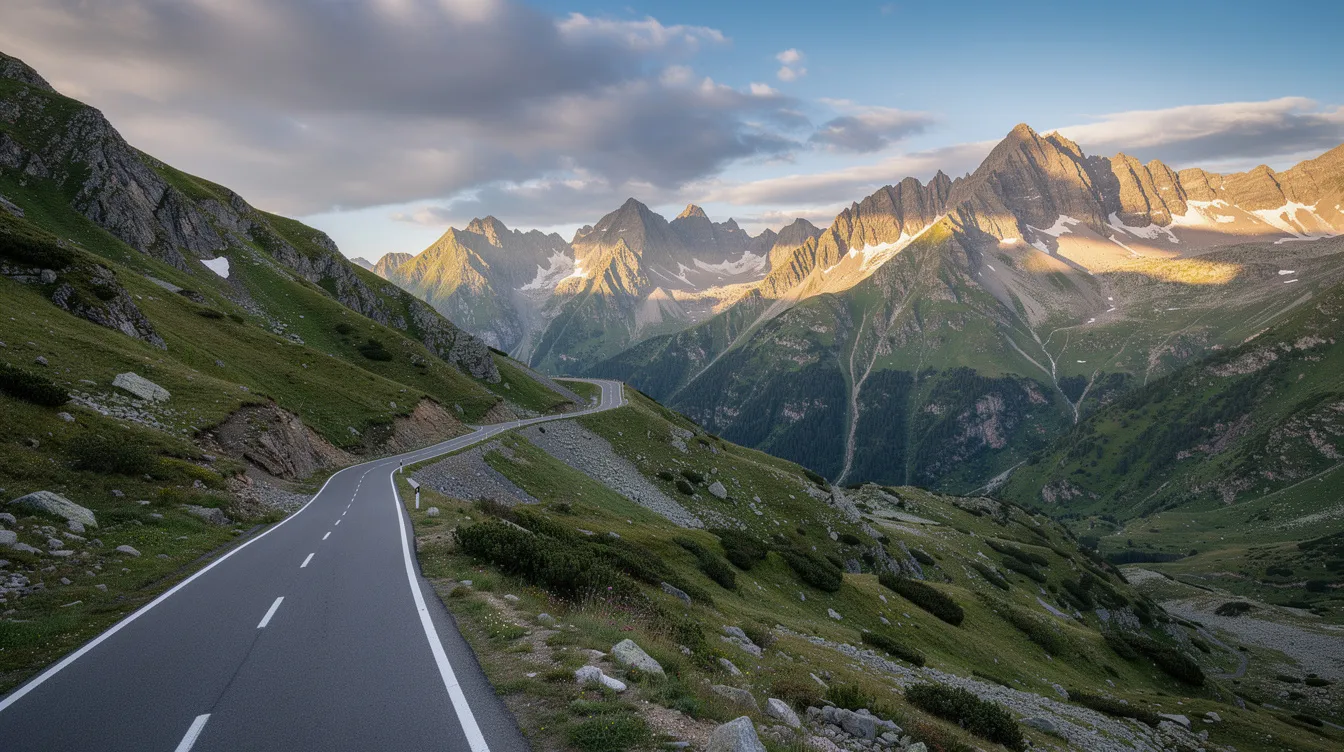
Northern Spain circuit:
- Route: Bilbao → Picos de Europa → Galicia’s Costa da Morte → Santiago de Compostela
- Expect: Atlantic weather (rain possible year-round), winding coastal roads (N-634), and dramatic cliff scenery
- Allow: 7–10 days minimum to avoid rushing
Andalusia loop:
- Route: Seville → Ronda → White Villages (Arcos, Grazalema) → Granada
- Expect: Mountain passes (A-92), hairpin bends, and stunning historic towns
- Best season: Spring (March–May) or autumn (September–October) to avoid summer heat
Pyrenees mountain drive:
- Route: Jaca → Ainsa → Vielha via mountain passes
- Expect: Steep gradients, hairpin turns, and potential snow from November to April—snow chains required by law when signage indicates
- Tip: Use low gears on long descents to preserve brakes
Mediterranean coast:
- Routes: Costa Brava (Girona to Cadaqués) or Costa del Sol (Málaga to Marbella)
- Expect: Heavy traffic in July–August, scooter traffic, and limited parking in beaten track coastal villages
- Warning: August operación salida weekends see highways around Madrid and Barcelona at 30%+ above normal capacity
Central Spain (Castilla y León, La Mancha):
- Characteristics: Long, straight Roman-style roads across exposed plateaus
- Challenges: Driver fatigue on monotonous stretches and strong crosswinds
- Tip: Take regular breaks at service areas
What to do in an emergency or if you get a fine
Spain has well-organised emergency services and clear procedures for police stops. Knowing what to expect reduces stress if something goes wrong.
Emergency contacts:
- Dial 112 from anywhere in Spain (works across the European Union)—operators usually speak Spanish and often English or French
- Orange or yellow SOS phones are installed approximately every 2 km on many Spanish motorways for breakdowns or when you lack mobile coverage
If stopped by Guardia Civil Tráfico:
- Stay in the car unless instructed otherwise
- Provide documents calmly: driving licence, IDP, passport, rental contract
- Follow directions without arguing—language barriers can escalate misunderstandings
On the spot fines for non-residents:
- Payment is usually requested immediately by card
- Paying within approximately 20 days typically qualifies for a 50% discount
- Failure to pay can result in vehicle immobilisation or impoundment
- Keep the receipt—it’s your proof of payment
After serious incidents:
- Contact your rental company immediately
- For accidents involving injury or significant damage, contact your embassy or consulate (e.g., British Consulate in Malaga or Barcelona)
- File a police report if required for insurance claims
Emergency kit recommendations:
- Water and non-perishable snacks
- Warm layer (mountain temperatures drop quickly)
- Basic first-aid kit
- Phone charger or power bank
- Particularly important when driving off the beaten path in remote areas like Extremadura, Picos de Europa, or high Pyrenees passes
Final tips for a smooth Spanish driving experience
With preparation and respect for local rules, spain driving becomes one of the best ways to experience the country’s diverse landscapes and cultures—from Basque Country cliffs to Andalusian white villages.
Key reminders:
- Always carry correct documents: licence, IDP (where recommended), passport, rental agreement, insurance proof
- Obey speed limits—cameras are everywhere and fines are steep
- Use child seats correctly and ensure all passengers wear seat belts
- Avoid alcohol completely when driving
- Plan routes in advance but allow extra time for scenic detours and parking in historic towns
Get your IDP before you go: Secure your International Driving Permit from International Automobile Authority before departure. The entire process takes about 5 minutes online, and you’ll have a digital copy in your inbox within minutes—no last-minute rental counter surprises or language issues.
Spanish road trips reward the prepared traveller. Whether you’re chasing Atlantic sunsets in northern Spain or winding through mountain passes toward Granada, good preparation lets you focus on enjoying the journey. Safe travels.