

Planning to rent a car abroad this year? You’ve probably encountered conflicting advice about international driving permits. Some travelers swear you need one everywhere, while others claim their regular license worked just fine. The truth lies somewhere in between, and understanding it could save you hundreds in fines or a very awkward conversation with local authorities.
Quick Answer: Do You Actually Need an International Driving Permit?
For most travelers driving in popular 2025 destinations like Italy, Japan, Australia, or the UAE, the answer is yes—you likely need an international driving permit IDP. This isn’t just a bureaucratic suggestion; it’s often a legal requirement that affects your ability to drive legally and maintain valid insurance coverage.
Here’s what matters right now:
- Italy, Japan, Thailand, and UAE either legally require an IDP or have rental companies that universally demand one, regardless of whether your license is in English
- An international driver’s license is not actually a license—it’s a certified translation of your existing driver’s license into multiple languages
- You must always carry both documents together; the IDP alone has no legal validity without your original license
- Applying is simple: around $20 through AAA in the USA, £5.50-£6 at UK Post Offices, or 20€-30€ through local automobile association offices in EU countries
The rest of this blog post will debunk the most common myths and walk you through when an IDP is truly needed versus optional for your destination country.
What Is (and Isn’t) an International Driving Permit?
Before diving into international driving IDP myths, let’s establish what this document actually is—and what it isn’t.
- The IDP is a standardized booklet created under the 1949 Geneva Convention or 1968 Vienna Convention on road traffic, translating your domestic driver’s license into 10 different languages including English, French, Spanish, Arabic, Chinese, German, and Japanese
- It is not a standalone international license and never replaces your original driver’s license from your home country
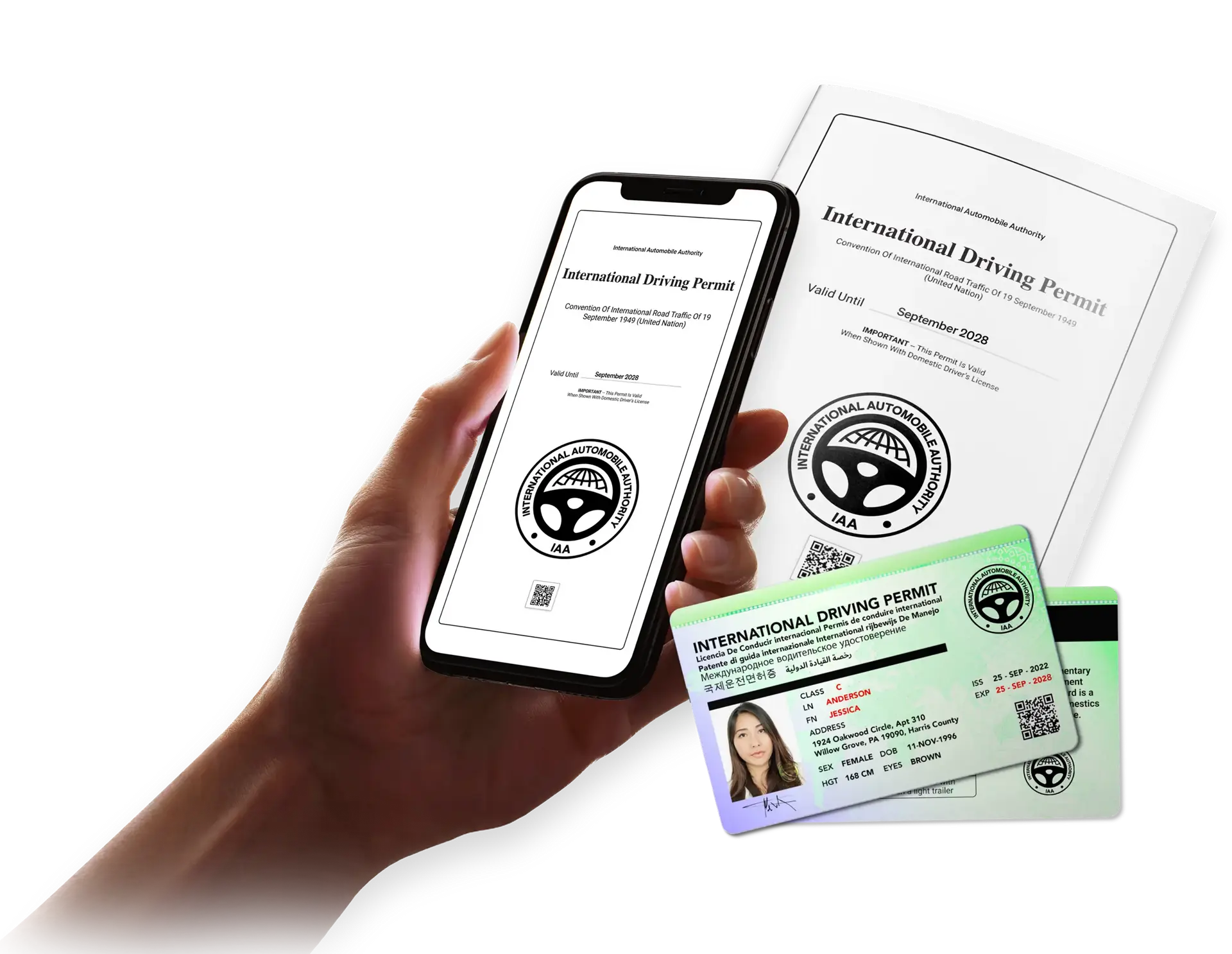
- The physical form is a grey or beige A6-sized paper booklet with a cover referencing the relevant convention
- Inside pages list your name, date of birth, photo, driving license categories (A for motorcycles, B for cars, C for trucks, D for buses), and expiry date
- It does not show your driving history, penalty points, or insurance information
- Validity period is typically 1-3 years depending on the issuing country, but never exceeds the expiry of your domestic license

Top International Driving IDP Myths (Debunked)
Despite clear official guidance, travelers in 2025 continue repeating outdated or incorrect IDP “facts” they found on social media or decade-old travel forum posts. These common misconceptions can lead to potential legal issues, voided insurance, and ruined road trips.
The most damaging myths we’ll address:
- “An IDP is a global driver’s license valid everywhere”
- “Your domestic license is always enough if it’s in English”
- “You can buy an IDP online from any website”
- “You can get an IDP on arrival at the airport”
- “If the rental company gives you the keys, you must be legal”
- “IDPs are only for long-term expats or cross-continent road trips”
Each myth will be tied to concrete examples from Italy roadside checks, Japan police stops, and rental counter experiences to keep this practical.
Myth 1: “An IDP Is a Global Driver’s License That Lets You Drive Anywhere”
This is the most persistent myth, and it’s completely false. The international driving permit only works in countries that recognize the specific convention your own country follows.
The IDP translates your existing driving credentials—it doesn’t grant new privileges. Here’s how this plays out in different countries:
Scenario | Country | Reality |
|---|---|---|
Fully accepts IDP + home license | Italy, Australia, UAE | Carry both documents and you’re covered for tourist driving |
Requires extra steps | Mainland China | IDP alone isn’t accepted; you need a Chinese temporary license with additional documentation and sometimes practical tests |
Ignores IDP after grace period | Germany | Residents must convert to a local license after 6 months; IDP only covers short visits |
Japan provides a cautionary example: in recent years, authorities stopped honoring 1968-convention IDPs for some nationalities, only accepting 1949 Geneva versions. Travelers caught with the wrong type face fines up to ¥500,000 (approximately $3,500 USD). Local driving laws always override international standards, and each destination country may impose minimum age requirements, medical restrictions, or other specific requirements the IDP cannot waive.
Myth 2: “Your Domestic License Is Always Enough If It’s in English”
In 2024, UK tourists driving in Italy were fined €300-800 by Carabinieri during routine autostrada checks—despite holding valid English-language licenses. American drivers in Japan faced similar penalties of ¥300,000 or more during traffic stops near tourist areas like Kyoto.
Legal requirements are based on international treaties and national law, not language. Many countries require an IDP from non-EU tourists regardless of what language appears on the original license.
Popular 2025 destinations where English alone is not enough:
- Japan (mandatory for all foreign tourists)
- South Korea (strict for non-Korean licenses)
- Thailand (rental firms and tourist police routinely enforce)
- Italy, Spain, Greece (required for non-EU visitors)
Some countries like Ireland, the Netherlands, and Scandinavia are often more lenient for short stays, but rental company contracts frequently insist on an IDP anyway.
Best practice rule: If driving outside North America or the EU, or staying more than 30-90 days, assume you need an IDP unless official government guidance clearly states otherwise.
Myth 3: “You Can Just Buy an IDP Online From Any Website”
This myth puts travelers at serious risk. Only designated national authorities can issue a convention-compliant international driver’s permit.
Legitimate issuers include:
- USA: AAA and AATA (the only State Department-authorized organizations)
- UK: Post Office or DVLA-approved agents
- Germany: ADAC
- France/Italy: National automobile clubs
Scam sites advertise “international licenses” valid for 10 years, featuring plastic card designs that look nothing like the required documents paper booklet format. Foreign authorities reject these immediately, and presenting a fake document can escalate a simple traffic stop into an arrest for forgery.
The U.S. State Department and UK government travel advisories have repeatedly warned against fake IDP vendors, particularly those charging $100+ for “instant” cards.
Quick verification checklist:
- Is the issuer listed on your government’s official travel site?
- Is the product a paper A6 booklet referencing 1949 or 1968 conventions?
- Is the fee reasonable ($20 USD, £6 GBP, 20-30€)?
If any answer is no, walk away.
Myth 4: “You Can Get an IDP on Arrival at the Airport”
Convention rules explicitly require the IDP to be issued in your home country before departure. You cannot land at Rome Fiumicino or Tokyo Haneda and ask the rental counter to issue one—they’re not legally permitted to do so.
Some countries offer separate temporary local licenses (certain Gulf states for residents, or Chinese cities after tests), but these are different documents with their own application process and requirements.
Processing times to plan around:
- Same-day service at AAA branch office locations or UK Post Offices
- 7-15 days for mail or online applications
Apply online or in person at least 2-3 weeks before departure. Treat the IDP like a visa—something you must sort out at home, not a last-minute fix.

Myth 5: “If the Rental Company Gives Me the Keys, I Must Be Legal”
Imagine picking up a rental car in Spain without an IDP. The rental counter doesn’t mention it, so you assume everything is fine. Three days later, you’re involved in a minor accident. During the investigation, police discover you lack the required documents—and suddenly your insurance claim is denied.
Rental desks sometimes accept foreign licenses to secure business, but this doesn’t override national law. In countries like Italy, Croatia, and Japan, post-accident investigations routinely check IDP compliance, affecting liability and insurance payouts.
Consequences can include:
- Insurance claims voided entirely
- Personal liability for damages (often €5,000+)
- Fines and potential driving bans
- Vehicle impoundment
Always check both the rental company’s terms and the destination government’s official guidance. Use the stricter requirement as your baseline.
Myth 6: “IDPs Are Only for Long-Term Expats or Cross-Continent Road Trips”
Even a 48-hour weekend in Dubai or a 5-day ski trip in Austria can require an IDP. UAE police conduct random checkpoints near airports and tourist routes, catching international travelers within hours of landing.
Many countries with 90-day tourist allowances still insist on an IDP from day one. The document requirement isn’t tied to trip length—it’s tied to the act of driving in a foreign country.
Consider the small fee (typically $15-30 or 20€-25€) versus the risk:
- Single-day car rentals
- Cross-border day trips (Slovenia to Croatia, for example)
- Airport transfers in rental vehicles
Treat the IDP as standard travel gear whenever planning to drive abroad, similar to travel insurance. The cost is negligible compared to potential legal complications.
Who Really Needs an IDP in 2025? Country and Traveler Examples
Exact rules change, but 2025 travelers can plan using recent patterns and government guidance. Here’s how requirements apply to common traveler profiles:
U.S. citizen driving in Italy and France: Both countries require an IDP for non-EU tourists. Italy enforces this strictly with roadside checks. France is slightly more lenient but rental companies consistently demand it.
UK resident visiting Japan: Post-Brexit, UK citizens are no longer EU members and must have an IDP under the 1949 Geneva Convention. Japan is especially strict—newer plastic UK licenses sometimes require additional verification.
Australian traveler touring Thailand and Vietnam: Thailand rental firms and tourist police routinely enforce IDP requirements. Vietnam has similar expectations for driving permits from most countries.
Key patterns:
- EU/EEA residents with EU-format licenses can drive across member borders without an IDP
- Non-EU tourists (Americans, Indians, Australians) typically need IDPs in Southern and Eastern Europe
- High-risk regions like parts of the Middle East and Southeast Asia make it particularly unwise to drive without proper documentation
How to Get a Legitimate International Driving Permit
The application process is straightforward and low-cost:
Basic requirements:
- Valid domestic driver’s license (the IDP mirrors your existing categories)
- Minimum age 18 in most countries
- Two passport-size photos (2x2 inches for U.S. applications)
- Application form
- Small fee: approximately $20 USD (AAA), £5.50-£6 GBP (UK Post Office), or 20€-30€ (EU automobile clubs)
Where to apply:
- USA: In-person at any AAA branch office or through AATA
- UK: Designated Post Office branches
- Germany: ADAC offices
- Italy: Touring Club Italiano
- France: Local automobile club locations
Processing is often same-day for walk-in applications. Postal applications typically take 7-15 days including shipping. Check validity dates carefully to ensure the IDP covers your entire trip.
Checking If You Need an IDP Before You Book
Before booking your rental, run through this pre-travel checklist:
- Check your government’s travel advice (travel.state.gov for U.S., UK FCDO, Australian SMARTRAVELLER)
- Review the destination country’s transport ministry or police website for tourist driving requirements
- Read rental company terms for your specific pickup location
Look for references to “1949 Geneva” or “1968 Vienna” conventions—these signal which IDP format is required for tourists from your region.
If official information is contradictory, err on the side of obtaining an IDP. The cost is minimal, and local regulations can be interpreted strictly during roadside checks.
Note: Residents face different rules than tourists. Long-term residents typically must convert to a local license after 6-12 months, beyond what any IDP covers.

IDP Myths Around Costs, Tests, and Insurance
Several misconceptions keep travelers from obtaining an IDP when they should:
You don’t need any new tests. The IDP simply translates your existing full license. If you can drive legally at home, you qualify.
Realistic cost ranges:
- $20 USD through AAA
- Around £6 GBP through UK Post Offices
- 20€-30€ through European automobile clubs
Anything drastically higher signals an unofficial seller.
The IDP is not insurance. It doesn’t include roadside assistance or collision coverage. You still need appropriate international car insurance or collision damage waivers for your rental.
Important: Some insurance providers and credit card companies explicitly require an IDP for coverage validity in certain countries, particularly in parts of Asia and Eastern Europe. Check your policy’s specific requirements before your trip.
What Happens If You Drive Without a Required IDP?
Consequences vary by country but can be severe:
- On-the-spot fines: Common across Europe, ranging from €100-800
- Vehicle impoundment: Possible in serious cases or repeat offenses
- Road trip ended: You may be prohibited from continuing until a licensed driver is found
- Insurance claims denied: Not having required documents can void coverage entirely, leaving you personally liable for damages and medical costs
- Criminal charges: In some jurisdictions (certain EU states, Japan), repeated violations can be treated as driving without a license
The IDP is a small piece of paperwork that protects against disproportionate financial and legal risk when traveling internationally.
Practical Tips for Using Your IDP Abroad
Once you have your IDP, here’s how to use it effectively:
- Always carry both documents when driving or at the rental counter—one without the other is incomplete
- Keep digital backups (photos or scans) stored securely online, though note these aren’t legally sufficient for driving
- Store documents in a waterproof travel wallet with your passport and insurance papers—not in the vehicle where theft is common
- When stopped by authorities, present your home country license first, then the IDP; let the officer select the language page most useful to them
- Double-check before border crossings on multi-country road trips—verify your IDP’s expiry date and convention type (1949 vs. 1968) match each destination’s requirements

Conclusion: Use Facts, Not Myths, to Plan Your International Driving
In 2025, international driving is easier than many online myths suggest—provided you rely on official rules instead of social media hearsay. The core message is simple: an IDP is a translation tool paired with your domestic license, not a magic global license, and both documents together are often essential for legal, insured driving abroad.
Check up-to-date guidance from your government and destination authorities a few days to weeks before departure. Some countries refine IDP rules year by year, and what worked for a friend in 2023 may not apply today.
Preparing your international driving permit in advance removes one of the biggest sources of travel stress. Spend 15 minutes at an AAA branch office or your local automobile association now, and focus on enjoying your 2025 road trip instead of worrying about roadside paperwork.