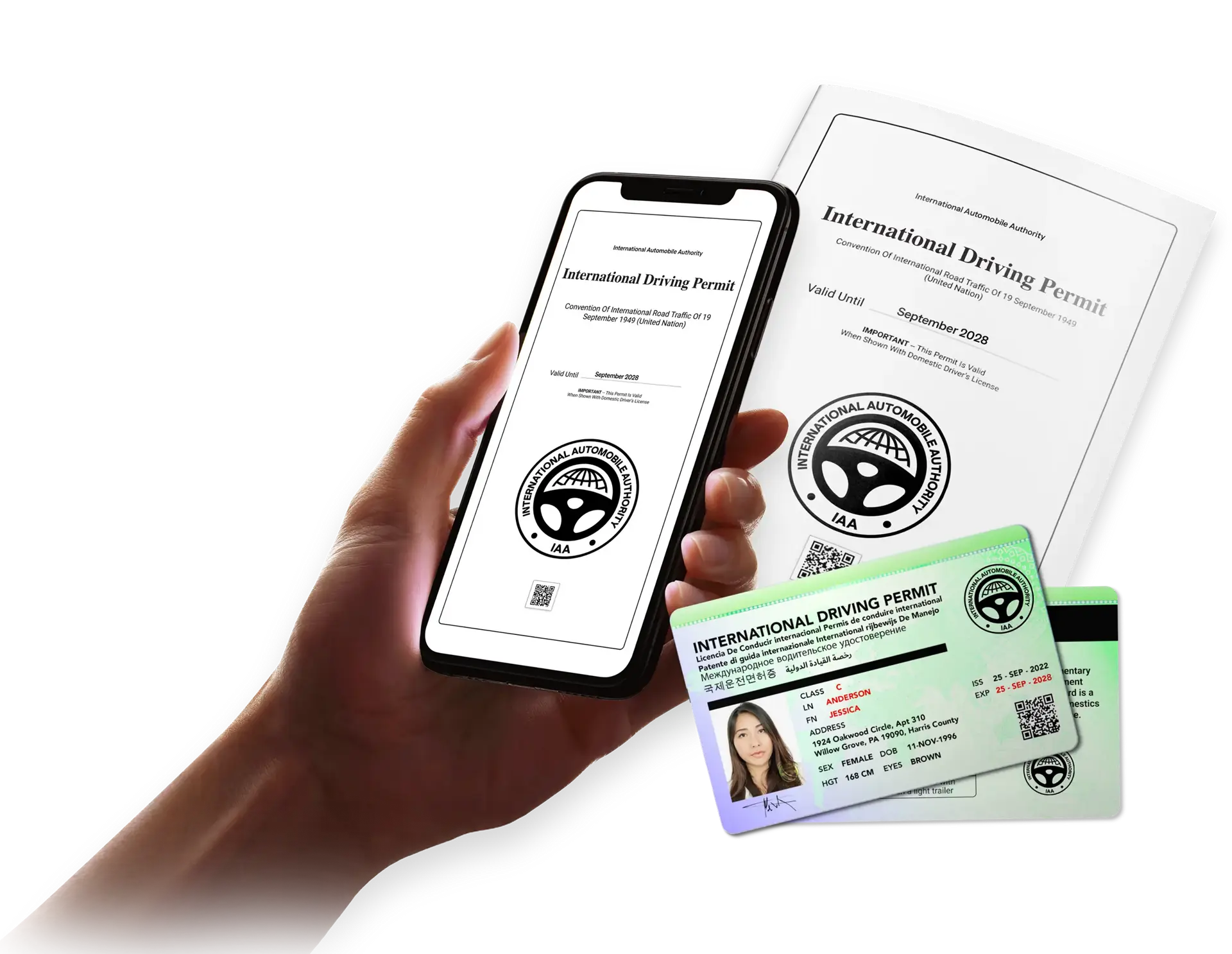


The international driving permit is a standardized booklet that translates a valid national driving licence into multiple languages, helping drivers navigate vehicle rental and road traffic regulations when traveling abroad. While many travelers know what an IDP is, fewer understand its fascinating historical development spanning over a century.
This article traces the international driving permit history from its origins in early 20th-century motoring to the modern conventions that shape today’s document. The IDP’s evolution is closely tied to the growth of cross-border tourism and a series of United Nations road traffic conventions. Today’s format and validity rules derive primarily from the 1949 Geneva Convention on Road Traffic and the 1968 Vienna Convention on Road Traffic.
Early Origins: Cross-Border Motoring Before World War II
The first attempts to regulate international driving predate the United Nations entirely, stemming from the explosive growth of private motor vehicle ownership in Europe and North America during the 1900s through 1920s. As automobiles became more accessible, adventurous motorists began crossing borders for tourism and commerce, quickly discovering a frustrating reality.
Early drivers often needed a separate driving permit for each country they entered, creating significant practical problems. A French tourist driving through Germany, Switzerland, and Italy might face detention or fines simply because local authorities abroad couldn’t read their documents. National licences varied wildly in size, content, and language, with no standardization to speak of.

The 1909 Convention relative to the International Circulation of Motor Vehicles, signed in Paris on 11 October 1909, represented the inaugural multilateral effort to harmonize rules for license recognition and vehicle registration across borders. While this convention fell short of creating a dedicated international permit, it established the principle of mutual recognition and set the stage for future developments.
During this period, automobile clubs like the Automobile Club de France and the Royal Automobile Club in Britain began informally issuing touring certificates and advocating for a unified approach. These organizations bridged critical gaps until formal structures emerged, though their documents lacked the uniformity needed for true international acceptance.
The 1926 Paris Convention and the First International Driving Permits
The International Convention relating to Motor Traffic, signed in Paris on 24 April 1926, is generally regarded as the legal genesis of the modern international driving permit. This landmark agreement introduced standardized concepts that would shape international driving for decades to come.
The 1926 convention established two fundamental principles: mutual recognition of foreign driving licences and the creation of a specific international document to accompany national licences when driving in a foreign country. This approach aimed to eliminate language barriers while respecting each nation’s local driver’s licensing laws.
Early IDPs issued after 1926 featured several distinctive characteristics. They adopted a booklet style format and used French as the primary language, reflecting its status as the lingua franca of international law at the time. The documents contained basic personal details and licensing categories, though security features were rudimentary by modern standards.
While the convention’s global reach remained limited, it strongly influenced European signatories and shaped the practices of national automobile associations. Countries like Iraq, Somalia, and Brazil formally required these permits, while Liechtenstein and Mexico accepted them alongside other formats.
Post-War Reforms: 1943 Inter-American Agreement and 1949 Geneva Convention
The Second World War disrupted international motoring frameworks, but post-war reconstruction spurred ambitious new agreements. Regional initiatives emerged alongside global reforms, creating a more comprehensive system for drivers traveling abroad.
The 1943 Convention on the Regulation of Inter-American Automotive Traffic addressed the Americas specifically, creating the inter american driving permit as a regional variant. This agreement covered countries including Mexico and several South American states, emphasizing reciprocal recognition while establishing distinct requirements for operators crossing borders in the Western Hemisphere.
The 1949 Geneva Convention on Road Traffic, signed on 19 September 1949, represented a transformative moment in international driving permit history. Ratified by 95 to 96 states and recognized in over 150 countries, this convention replaced the 1926 Paris text for ratifying nations and introduced a modernized IDP format that would endure for decades.
The 1949-model IDP established several enduring principles:
- Validity limited to one year from the date of issue
- Requirement that the permit be used only outside the issuing country
- Mandatory accompaniment by a valid license from the holder’s home nation
- Standardized grey-covered A6 booklet format
During the 1950s and 1960s, organizations like the american automobile association and European motoring clubs became the primary everyday issuers of IDPs. These associations operated under authority granted by their respective governments, creating the infrastructure that travelers still use today. The AAA, founded in 1902, became a cornerstone institution for American drivers seeking to obtain permits for international travel.
The 1968 Vienna Convention and the Modern IDP Framework
The Convention on Road Traffic signed in Vienna on 8 November 1968 emerged during an era of rapid motorization and growing European integration. This convention sought to further harmonize road rules and driving documents across a world where international travel was becoming increasingly common.
The 1968 Vienna Convention coexists with the 1949 Geneva Convention, though for each state that ratifies the newer text, it supersedes the older one. As of the 2010s and 2020s, approximately 72 to 80-plus countries have become parties to the Vienna framework.
Two annexes became central to the modern IDP’s structure. Annex 6 established a standardized model for domestic driving licence design, while Annex 7 defined the international driving permit idp format, content, and required languages.
Key changes introduced by the 1968 convention included:
- Maximum validity extended to three years from issue date
- Validity never exceeding the expiration date of the domestic licence
- Recognition limited to one year from arrival in the host country
- Clearer categories distinguishing motorcycles (A), passenger cars (B), and trucks/buses (C, D, E with subcategories)
The convention specified the A6 paper size and prescribed multilingual entries in French, English, Russian, and Spanish, reflecting United Nations working languages. Many countries added additional languages, with some permits eventually featuring nine to twelve translations.
Amendments and Regional Supplements to the 1968 Convention
The original 1968 Vienna Convention has undergone several amendments, notably in 1993, 2006, and 2011. A European Agreement from 1971 supplements the convention for many UNECE member states, further refining requirements.
These amendments clarified licence categories, adapted to new vehicle technologies, and updated annexes without fundamentally changing the IDP concept. Driving permits issued before key cut-off dates, such as 29 March 2011, remained valid until their expiration date, creating transitional periods where different formats coexisted.
European regional instruments and EU directives further harmonized domestic licences, reducing the need for IDPs within the European Economic Area. However, the IDP remains essential for European drivers venturing beyond the continent or for visitors from other countries traveling through Europe.
Design Evolution: Languages, Format, and Security Features
The IDP’s physical appearance evolved significantly from early interwar booklets to the standardized A6 grey covers defined by UN annexes. Early permits relied heavily on French, gradually expanding to include other European languages as international driving became more widespread.

Over time, the number of languages increased dramatically. Modern IDPs typically feature nine to twelve language translations, presenting identical personal and licensing data side-by-side on multilingual pages. This design allows a law enforcement officer in any signatory country to read key details without requiring a certified translation or separate local language translation.
Security concerns prompted gradual improvements as fraudulent documents proliferated. Better quality paper, official stamps, and eventually security printing features were introduced to combat illicit versions marketed as international driver’s license alternatives. National automobile associations and government transport ministries standardized visual layouts to match annex models, reinforcing international recognition and helping car rental companies located worldwide verify document authenticity.
Relationship with Domestic Licences and Regional Arrangements
From the earliest conventions, the IDP has never functioned as a standalone authorization to drive. This principle, established in 1926 and preserved through the 1949 and 1968 conventions, requires that drivers always carry their valid domestic licence alongside the permit.
The IDP serves as a local language translation of the home licence, helping authorities abroad verify that the holder meets their home country’s government licensing standards. It does not create a separate driving record or supersede local laws in the host nation.
Regional economic communities have created varying arrangements. The European Union and EEA established mutual recognition of domestic licences, making IDPs largely unnecessary for intra-EU travel while remaining essential outside Europe. ASEAN and other regional blocs maintain varying levels of recognition for member-state licences.
Long-term residents in a foreign country typically must exchange their licence for a local license, even when IDPs cover short stays. This patchwork of obligations means an IDP based on one convention might be preferred in certain country’s government jurisdictions while another format applies elsewhere. Travelers to South America, for instance, may find the Inter-American permit more widely accepted than Geneva or Vienna versions.
Modern Developments: ISO Standards and Digital Trends
The publication of ISO/IEC 18013 in the 2000s introduced international standards for driving licence design that align with UN road traffic conventions. Organizations like the American Association of Motor Vehicle Administrators have created design standards, including the 2025 DL/ID Card Design Standard based on ISO/IEC 18013-1, improving security and readability for North American licences.
These standards incorporate scannable barcodes and enhanced security features, addressing concerns about fraud and document verification. However, the ISO standard has not been formally adopted as a legal replacement for convention-based IDPs. The historic 1949 and 1968 models still underpin international law.
Emerging experiments with mobile and digital driving licences in the 2010s and 2020s raise intriguing questions about paper permit futures. Some U.S. states and European nations have piloted digital licence apps, potentially paving the way for electronic equivalents. Yet the legal framework still rests on mid-20th-century conventions, and many countries require traditional documents that authorities can physically inspect.
Timeline Summary of Key Milestones
The international driving permit history spans more than a century of diplomatic cooperation. In 1909, the Paris Convention on motor vehicle circulation established the first multilateral framework, though without a dedicated permit. The 1926 Paris Convention on Motor Traffic introduced the first standardized international driving document, creating the foundation for everything that followed.
The 1943 Inter-American Convention established the IADP for Western Hemisphere travel, while the 1949 Geneva Convention on Road Traffic created the widely adopted one-year validity model still recognized in many countries today. The 1968 Vienna Convention set the modern framework through its Annexes 6 and 7, introducing extended validity periods and refined vehicle categories.
From 1971 onward, European agreements and subsequent amendments in 1993, 2006, and 2011 refined categories and security features. The 2000s through 2020s brought ISO standards, advanced anti-fraud measures, and early digital licence initiatives.
Today’s IDP represents over a century of international negotiation aimed at making cross-border driving safer and more predictable. Understanding this history helps travelers appreciate why the document they carry exists and why countries require it. Before your next international journey, take time to verify which conventions apply to your destination and ensure you have the proper documentation for a smooth experience on foreign roads.