

Introduction
Driving laws differences between USA and India represent two fundamentally distinct approaches to road safety, enforcement, and traffic regulations. Understanding these traffic laws is essential for anyone planning to drive in either country, as the contrast between America’s decentralized but strictly enforced system and India’s centralized but flexibly implemented framework creates significant challenges for international drivers.
This guide covers traffic regulations, licensing requirements, enforcement practices, and practical driving differences between these two nations. Whether you’re an expat relocating between countries, a tourist planning to rent a vehicle, an international driver seeking comparison, or a policy analyst studying global road rules, this content addresses your specific needs and concerns about navigating these contrasting systems.
The main differences can be summarized directly: the USA drives on the right side while India drives on the left side; American enforcement is consistent and technology-driven while Indian compliance varies significantly by region; USA licensing involves graduated systems with strict testing while India follows a centralized Motor Vehicles Act with variable implementation across states.
Key outcomes you will gain from this guide:
- Understanding of how legal frameworks differ between federal/state systems and centralized national laws
- Clarity on licensing age requirements, testing procedures, and documentation needs
- Detailed comparison of speed limits, traffic signals, and right-of-way rules
- Insight into enforcement practices, penalties, and road infrastructure variations
- Practical tips for adapting your driving when transitioning between these countries
Understanding Driving Law Frameworks
The structure of driving laws in the USA and India reflects each country’s broader governmental philosophy. In America, traffic regulations emerge from a combination of federal guidelines and state-specific rules, creating 50 distinct systems with common threads. In India, a single national law governs the entire country, though implementation varies dramatically by state and city. Recognizing these foundational differences helps drivers understand why rules that seem similar on paper function very differently in practice.
USA Federal and State System
The United States does not have one national driving law. Instead, each state establishes its own traffic laws, licensing rules, speed limits, and enforcement mechanisms, while federal law influences policy through funding conditions. For example, federal incentives persuaded all states to adopt a blood alcohol concentration (BAC) limit of 0.08% for DUI offenses.
Consistent federal requirements do exist across states: commercial driving across state lines must comply with federal safety standards, driver’s licenses must meet minimum format specifications, and vehicles—especially commercial ones—must meet federal safety and emissions standards. The Commercial Driver’s License (CDL) system applies nationwide for heavy vehicle operators.
State variation remains substantial. Speed limits range from 25-35 mph in urban residential zones to 85 mph on certain Texas rural freeways. This decentralized approach creates a system where drivers must learn state-specific rules when traveling, yet the underlying enforcement culture remains relatively consistent throughout the country.
India Centralized Motor Vehicles Act
India operates under the Motor Vehicles Act, 1988, with major amendments enacted in 2019 that significantly increased penalties and introduced electronic enforcement requirements. This central legislation defines core legal requirements while state governments execute regulations through Regional Transport Offices (RTOs) and state-specific rules.
Key sections include Section 112 governing speed limits, Rule 167A mandating electronic monitoring devices like speed guns and ANPR cameras, and Section 136A requiring automated enforcement tools across states. The Supreme Court has directed all states to implement these provisions, with 132 cities specifically mandated for electronic enforcement device installation.
Despite this unified legal framework, enforcement and compliance vary greatly by region. States can set specific speed limits lower than central maxima and establish zone-specific rules. Delhi may enforce traffic signals strictly while other cities face challenges with inconsistent adherence. This contrast between uniform law and variable execution defines the Indian driving experience.
Understanding these governmental structures prepares you for the specific traffic rule differences that flow from them.
Core Traffic Regulation Differences
Building on these distinct legal frameworks, the practical traffic regulations drivers encounter daily differ substantially between countries. From speed limits to signal compliance, each nation’s approach reflects its underlying road safety philosophy and infrastructure realities.
Speed Limits and Road Types
USA speed limits depend heavily on state law and road classification. Urban and residential streets typically post limits of 25-35 mph (approximately 40-55 km/h), while rural freeways and interstates may permit 75-85 mph (120-137 km/h) in western states. Some states apply lower limits for trucks or during night driving, and school zones universally require reduced speeds.
India’s central government established expressway and national highway maximum speed limits for passenger cars (M1 category) at 120 km/h, with urban roads capped around 70 km/h. However, states may impose lower limits, and different vehicle classes face different restrictions. Light, medium, and heavy vehicles each have distinct maximum speeds, creating a complex regulatory environment.
Enforcement technology differs markedly. America utilizes widespread speed cameras, radar enforcement, and consistent police patrols with predictable consequences for violations. India has ramped up electronic monitoring following Supreme Court directives, but compliance remains patchy. Data shows only about 1 million of 21.8 million transport vehicles have speed-limiting devices installed.
Right of Way and Traffic Flow
The most fundamental difference: America drives on the right side while India drives on the left side. This affects every basic maneuver—lane positioning, overtaking patterns, intersection approaches, and steering wheel placement in vehicles.
Roundabout navigation reflects broader traffic flow philosophies. In the USA, priority belongs to traffic already circulating; entering drivers yield consistently. In India, while similar rules exist legally, actual adherence varies, and many intersections remain uncontrolled or poorly signed.
Pedestrian rights represent another significant contrast. American crosswalks receive legal protection, with state laws requiring drivers to yield to pedestrians in marked crossings. Jaywalking laws exist and are enforced in many cities. In India, even where zebra crossings exist, driver compliance remains low, signage may be faded or missing, and pedestrians often navigate traffic without formal protections.
Traffic Signal and Sign Compliance
Traffic signals operate under different standards regarding timing and enforcement. USA standards, derived from engineering studies and the Manual on Uniform Traffic Control Devices (MUTCD), define minimum yellow phase durations to permit safe stopping. Signals follow consistent national patterns for colors, timing, and visibility.
India uses Indian Road Congress (IRC) standards for signage, but many signals have inadequate yellow timing or non-standard implementation. Road signs may be non-reflective, ambiguous, or bilingual with varying quality, and maintenance remains uneven across states and cities.
Enforcement consistency creates the practical difference. American drivers expect surveillance and legal consequences for violations—red light cameras, speed cameras, and regular police enforcement are standard. Indian enforcement is improving, with e-challans and camera systems expanding especially in metros like Delhi, but remains variable driven by local police priorities and resource constraints.
Key traffic regulation differences:
- Side of road: USA right, India left
- Speed enforcement: USA consistent technology-driven, India expanding but uneven
- Pedestrian protection: USA legally enforced crosswalks, India variable compliance
- Signal standards: USA uniform MUTCD standards, India IRC with inconsistent implementation
These regulatory variations connect directly to how each country manages licensing and documentation.
Licensing and Documentation Requirements
The differences in traffic regulation philosophies extend naturally to how each country qualifies drivers. Both nations require licenses and testing, but the processes, age requirements, and validity periods vary substantially.
License Obtaining Process
Understanding when each process applies depends on your situation—whether you’re a resident seeking a permanent license or a visitor needing temporary driving privileges.
USA licensing process occurs at the state level. For adults 18 and older, typical requirements include proof of identity and residence, passing a vision test, completing a written knowledge exam, and passing a practical road test. Many states also require driver’s education courses.
For minors, most states implement Graduated Driver Licensing (GDL) systems with multiple stages: a learner’s permit (often available at 15-16), required supervised practice hours, an intermediate license with restrictions on night driving and passenger limits, and finally a full unrestricted license typically at 17-18. Commercial driving across state lines requires a CDL and minimum age of 21.
India licensing process follows the Motor Vehicles Act framework administered through RTOs. Minimum ages are: 16 for motorcycles without gear (50cc or less), 18 for gear motorcycles and light motor vehicles (LMV), and 20 for transport or commercial vehicles.
Applicants must apply through the RTO or Parivahan portal with documents proving age, address, and vision. The learner’s license, valid for six months, requires passing a written or verbal test depending on literacy considerations. After a minimum period (typically 30 days), candidates can apply for a permanent license upon passing a practical driving test. Some states require training school certificates.
Age requirement comparison:
- USA: Learner’s permit at 15-16, full license at 17-18, commercial at 21
- India: Gearless motorcycle at 16, LMV at 18, commercial/transport at 20
International Driving Permits and Recognition
Criterion | USA | India |
|---|---|---|
Minimum driving age (cars) | 16-18 (varies by state) | 18 years |
Minimum commercial driving age | 21 years | 20 years |
Written test required | Yes (state-specific) | Yes (learner’s license) |
Practical road test required | Yes | Yes |
License validity | 5-10 years (state-dependent) | Until age 40, then 10-year periods |
International Driving Permit recognition | Yes, with foreign license | Yes, with foreign license |
IDP validity | Typically 1 year | Typically 1 year |
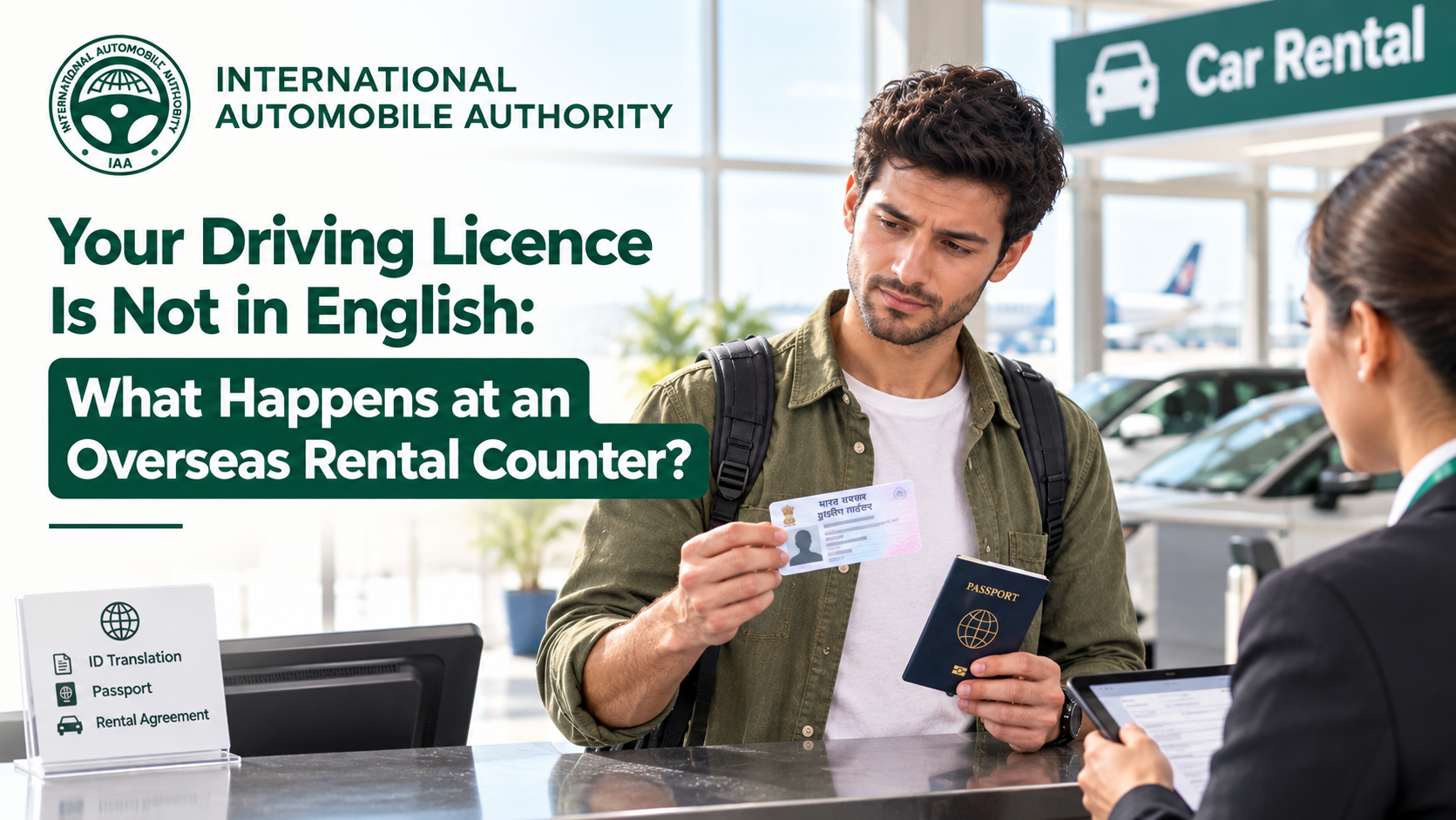
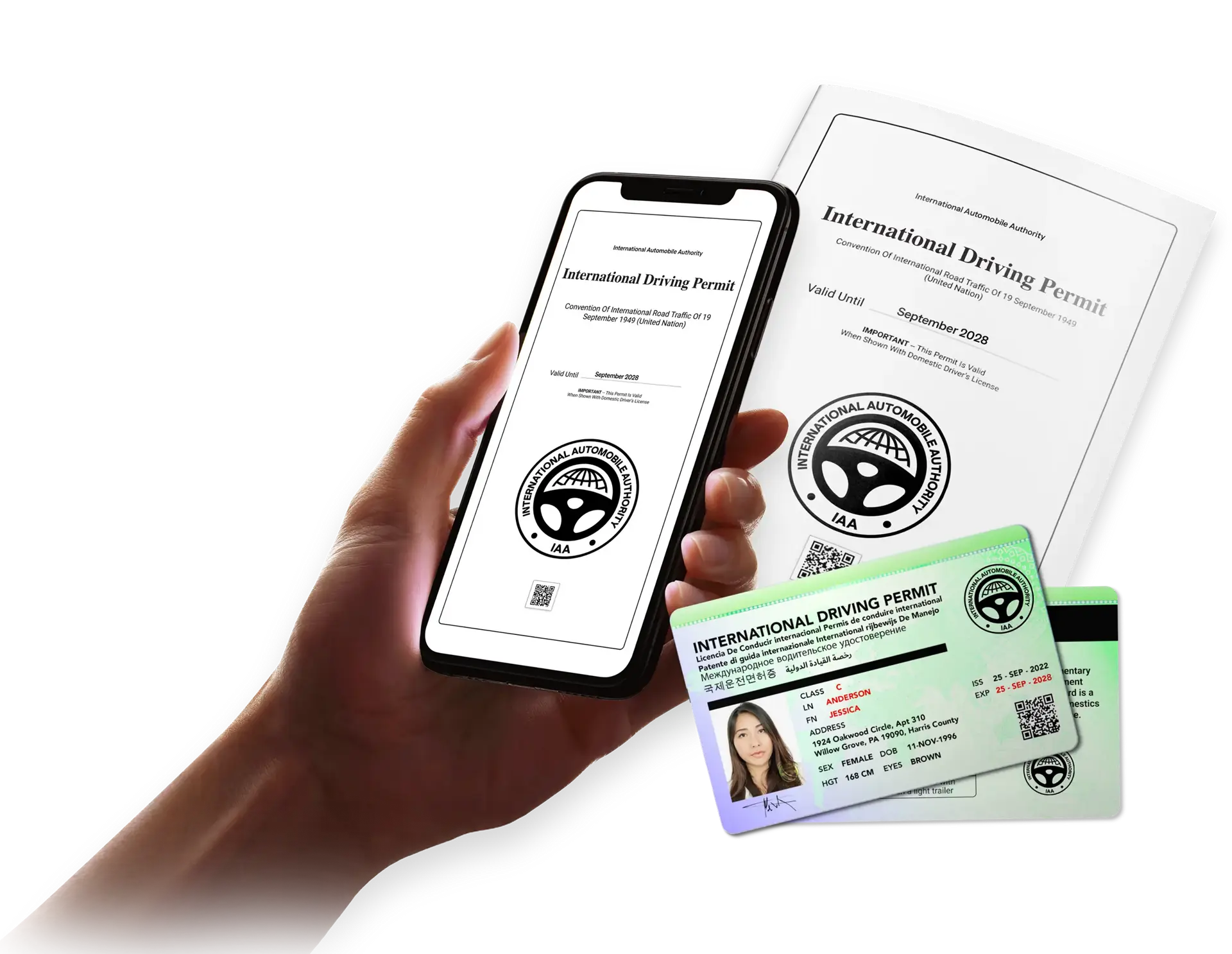
Both countries recognize foreign driver’s licenses for visitors, typically requiring an International Driving Permit in conjunction with the original license. The IDP serves as a translation document rather than a standalone license.
For longer stays, requirements change. USA residents and immigrants must obtain a state license after certain periods (varying by state). Foreign nationals in India can drive with valid foreign license and IDP temporarily, but extended stays require obtaining an Indian license through the RTO.
Validity periods differ substantially. Indian permanent licenses now follow age-based validity: until age 40 for those under 30, then 10-year periods until age 50-54, then until 60, with five-year renewals after age 55. American licenses typically require renewal every 5-10 years, with some states mandating medical exams for elderly drivers.
These documentation requirements highlight practical challenges international drivers face when moving between systems.
Common Challenges and Solutions
International drivers transitioning between USA and India face challenges beyond paperwork. Physical driving differences, enforcement expectations, and road culture require conscious adaptation.
Adapting to Opposite-Side Driving
The shift from right-side to left-side driving (or vice versa) affects instinctive responses, not just intellectual understanding. Mirror positioning feels reversed, lane positioning requires conscious thought, and turning at intersections demands deliberate attention.
Practical solutions:
- Practice in low-traffic areas before venturing onto busy roads
- Use a smaller vehicle initially for easier maneuvering
- Have a co-pilot to provide reminders during the adjustment period
- Create visual cues—your seatbelt position can remind you which side you’re driving on
- Allow extra time for trips during the first few weeks; fatigue from concentration is normal
Most drivers report significant improvement within one to two weeks, though instinctive reactions may take longer to fully adjust.
Understanding Enforcement Differences
The contrast between strict American enforcement and variable Indian compliance creates different expectations and behaviors.
In the USA, expect consistent consequences for violations. Speed cameras, red light cameras, and police patrols operate predictably. Fines range from hundreds to thousands of dollars; penalties may include license suspension, insurance premium increases, and points accumulation. DUI enforcement is particularly strict, with BAC limits of 0.08% (0.05% in Utah) and severe penalties including potential jail time.
In India, enforcement is improving but remains inconsistent. E-challans and ANPR cameras are expanding in cities like Delhi, and the 2019 amendments significantly increased fines—₹5,000 for driving without a license, ₹5,000 for mobile phone use while driving. However, only about 175 million of India’s 385 million registered vehicles are insured, indicating compliance gaps.
Solution for drivers: Learn state-specific or district-specific laws, keep all documentation current, expect frequent checkpoints in India, and never assume enforcement will be lenient in either country.
Road Infrastructure and Driving Culture Variations
Infrastructure quality varies dramatically. American roads feature uniform maintenance, clear road signs following MUTCD standards, consistent lane markings, and adequate lighting. Indian infrastructure ranges from excellent expressways to poorly maintained urban roads with missing signage and variable lighting.
Traffic mix differs fundamentally. American roads primarily accommodate cars and trucks with segregated pedestrian and bicycle infrastructure in many areas. Indian roads combine cars, buses, trucks, two-wheelers, three-wheelers, pedestrians, and occasionally animals—all sharing limited space.
Driving culture reflects these conditions. American drivers generally maintain lane discipline, respect speed limits, and yield predictably. Indian traffic often involves flexible lane use, frequent horn communication, and adaptive behavior in congestion. Neither approach is inherently wrong—each reflects local conditions—but drivers must adjust expectations accordingly.
Safety considerations:
- In India: expect the unexpected; maintain heightened awareness; use horn communicatively
- In USA: follow rules precisely; expect other drivers to do the same; use signals consistently
Preparation and awareness remain your best tools for safe driving in either country.
Conclusion and Next Steps
The differences between USA and India driving laws extend far beyond which side of the road you drive on. America’s decentralized but consistently enforced system contrasts sharply with India’s centralized but variably implemented framework. Understanding these distinctions—in legal structure, traffic regulations, licensing requirements, and enforcement practices—prepares you for safer driving in either country.
Immediate actionable steps:
- Obtain proper documentation before driving: International Driving Permit if visiting, local license if residing
- Study the specific state or regional rules where you’ll be driving
- Practice in low-traffic environments when adjusting to opposite-side driving
- Ensure valid insurance meeting local requirements
- Observe local driving behavior before joining traffic flow
Related topics worth exploring:
- Vehicle insurance differences (liability requirements, comprehensive coverage norms)
- Emergency procedures (how accidents are handled, police reporting requirements)
- Road trip planning (service station frequency, highway rest areas)
- Vehicle fitness and pollution compliance laws
Additional Resources
USA Resources:
- State DMV websites (search “[state name] DMV” for official information)
- National Highway Traffic Safety Administration (NHTSA): nhtsa.gov
- AAA Foundation for Traffic Safety: aaafoundation.org
India Resources:
- Ministry of Road Transport and Highways: morth.nic.in
- Parivahan Portal for license services: parivahan.gov.in
- State RTO websites for regional requirements
International Driving Permits:
- USA: Available through AAA or AATA
- India: Available through Automobile Association of India affiliated clubs
Test Preparation:
- USA: State-specific driver’s manuals available free from DMV websites
- India: Parivahan portal practice tests and RTO study materials